FDE course · BengaluruFor working engineers and engineering teams
FDE Course & Training in Bangalore for Engineers and Teams
A hands-on forward deployed engineer (FDE) course with Hitesh Motwani. Learn the craft that takes AI from a demo to a system a customer actually uses: RAG, AI agents, evaluations, production deployment and customer discovery, practised on your own stack, data and use cases.
- ✓Duration — half-day workshop to a multi-week cohort, seven modules plus a capstone
- ✓Format — live online plus in-person labs in Bengaluru; 1-to-1 coaching online
- ✓Certificate — Skillopedia FDE certificate on completing the capstone
Individual engineer? No public batches: you get 1-to-1 FDE coaching online, around your own plan. Book a free call →


Teams at these organisations have trained with Hitesh & Skillopedia













200,000+ professionals · 16+ countries · 4.8★ average session rating · Corporate clients include Google, Microsoft & Tata Group
Quick answer
FDE course in Bangalore at a glance: duration, format, fees, certificate
The facts course seekers and training buyers ask first. Pick your path, then check the details.
Path 1 · Individual engineer
Looking for an FDE course for yourself?
- Format: 1-to-1 FDE coaching online, built around your own plan and projects
- Batches: there are no public batches; sessions are scheduled with you
- Eligibility: working Python, basic SQL and API experience; two or more years of engineering is typical
- You leave with: reviewed projects, an evaluation report and portfolio feedback
Path 2 · Team, GCC or L&D
Training a team of engineers?
- Format: live online sessions plus in-person lab days at your Bengaluru office
- Cohort: 15–25 engineers, half-day to multi-week
- Built on: two to four of your own use cases, under your NDA
- You get: a written agenda and proposal, a capstone review and a close-out report
| What it is | Hands-on training in the forward deployed engineer (FDE) craft: building AI systems inside a real business and getting them used |
|---|---|
| Who it is for | Software, data and ML engineers with working experience; solutions engineers who need deeper build skills; engineering teams at GCCs, product companies, IT services firms and AI start-ups |
| Eligibility | Comfortable Python, basic SQL and experience calling APIs. Freshers should build fundamentals first |
| Format | Live virtual sessions plus in-person labs at your Bengaluru office; 1-to-1 coaching online |
| Batches | No public batches. Team cohorts are scheduled with your company; individuals book 1-to-1 coaching |
| Group size | 15–25 engineers per cohort |
| Duration | Half-day introduction to a multi-week programme |
| Curriculum | Seven modules: GenAI foundations, enterprise architecture, agents, RAG, real AI products, the FDE deployment framework, capstone |
| Capstone | A deployed RAG or agent service built against a live, client-style brief |
| Certificate | Skillopedia Forward Deployed Engineer certificate on completing the capstone (a training certificate, not a vendor credential) |
| Fees | Quoted per engagement: corporate cohorts usually on a day-rate model with travel at actuals; 1-to-1 coaching quoted per package. You get a written proposal before you commit |
| Outcome promise | Skills and working artefacts. No job, placement or salary guarantee |
Free proposal · No obligation
Tell us what you want your engineers to ship
Share a line about yourself or your team, the stack you work with and what you want FDE training to change. You get a personal reply with a suggested format, an outline agenda and next steps.
- Teams and GCCs: a written agenda built around your own use cases
- Engineers: a 1-to-1 plan, or a seat in an employer-led cohort
- Prefer to talk first? Book a free call
The role
What a forward deployed engineer actually does
A forward deployed engineer is a software engineer who works inside a customer’s business, rather than behind a product roadmap, and owns the job of getting software or AI running there in production.
The idea comes from Palantir, which sent engineers to sit with customers and adapt its platform to their data and problems. Internally they were called forward deployed software engineers, or “Deltas”, as distinct from the developers building the core product.
Generative AI made the role mainstream. A frontier model is easy to call from a notebook and hard to make reliable inside a bank’s ticketing system or a manufacturer’s document archive. So AI labs such as OpenAI and Anthropic, enterprise software companies and AI start-ups now hire FDEs to close that gap with their largest customers.
This programme is independent. It is not affiliated with, or endorsed by, Palantir, OpenAI, Anthropic or any employer named on this page.
A typical FDE week
- Discovery: sit with an operations or business team and find the problem worth solving, which is rarely the one first described
- Access: get to the data, APIs and permissions that real systems need, through security review
- Build: ship a retrieval pipeline, an agent or an integration, usually in Python, against messy real data
- Evaluate: write test sets so “it seems to work” becomes a measured pass rate
- Deploy: add logging, guardrails, cost limits and a rollback path
- Adopt: train the users, watch usage, and feed what you learn back to the product team
Want the self-study version first? Read the free 90-day forward deployed engineer roadmap.
Compare the roles
FDE vs software, solutions and AI engineer
The titles overlap and job descriptions blur them. This is how the roles usually differ in practice, and why FDE training covers more than an AI course does.
| Role | Main job | Writes production code? | Time with customers | Judged on |
|---|---|---|---|---|
| Forward deployed engineer | Make the product or AI work inside one customer’s business | Yes, a lot | High, often on-site | A live system the customer uses, and what it changed |
| Software engineer | Build the core product for all customers | Yes | Low | Features shipped, quality, reliability |
| Solutions / sales engineer | Demos, proofs of concept and technical answers before the sale | Some, mostly demo-grade | High, before the sale | Deals won, technical win rate |
| AI / ML engineer | Models, pipelines, evaluations and AI features | Yes | Low to medium | Model and feature quality |
| Implementation consultant | Configure and roll out an existing product | Little or none | High | Go-live on time and on budget |
The short version: an FDE combines the build depth of an AI engineer with the customer time of a solutions engineer, and stays accountable after go-live. That combination is why most training that covers only prompting, or only model theory, falls short for this role.
Skills map
The FDE skill set, layer by layer
FDE work needs three layers at once. The programme builds them together, on the same project, because that is how the job mixes them.
1Engineering base
Solid software fundamentals
- Python for services and data work, plus SQL
- REST APIs, auth, webhooks and integrations
- Cloud basics: containers, queues, secrets, logs
- Git, code review and writing for handover
2AI systems
Building with models, reliably
- LLM behaviour, prompting and structured output
- RAG: chunking, embeddings, hybrid retrieval, re-ranking
- Agents: tool calling, MCP, orchestration, human approval
- Evals, guardrails, cost and latency control
3Field skills
Working inside a customer
- Discovery interviews and problem framing
- Scoping, trade-offs and saying no without losing the room
- Explaining risk and value to non-technical owners
- Rollout, training users and measuring adoption
Who it is for
Who this FDE course in Bengaluru is built for
Two audiences come to this page: engineers who want the FDE role, and leaders who need FDE capability in their teams. The programme serves both, with different formats.
Engineers who want the FDE role
- Software engineers with two or more years of experience
- Data scientists and ML engineers who need production and customer skills
- Solutions engineers and consultants who need deeper coding
- Backend or platform engineers moving into applied AI
Companies building FDE capability
- GCCs turning AI pilots into production systems for business units
- Product and SaaS companies standing up a forward deployed team
- IT services delivery teams that now own AI deployments for clients
- AI start-ups whose engineers spend more time with customers
Probably not the right fit yet
- You are new to programming: start with Python and one backend project
- You want a certificate to replace experience: hiring managers look for shipped systems
- You need only prompting skills for everyday work: a generative AI workshop suits you better
Outcomes
What engineers can do at the end
Every outcome is shown on real work in the capstone, not tested with a multiple-choice quiz.
Where most teams start
Day zero
- Capable developers, unsure how to scope an AI engagement from a discovery conversation
- Comfortable in Python, with little production LLM, RAG or agent experience
- Can run a prototype locally, but not as an observable, secure, cost-aware service
- No shared method for choosing between RAG, agents, fine-tuning or classical ML
- Can demo AI, but cannot yet drive adoption or show value to a business owner
Where they finish
Programme close
- Run a discovery workshop and write a solution sketch a sponsor can fund
- Build RAG and agentic systems on the cloud and data your business actually uses
- Ship an end-to-end service with monitoring, guardrails and cost controls
- Pick the right AI pattern deliberately and defend the trade-offs
- Hand over with an evaluation set, a runbook and a 90-day adoption plan
Curriculum
FDE course syllabus: seven modules, built around your stack
The reference syllabus below is the same one used for the corporate FDE programme. It is rebuilt for each group’s starting point, tech stack and target outcomes. Roughly a third of the time is explanation and two thirds is building.
01Module 01
Foundations of generative AI
- How LLMs work and the 2026 model landscape: GPT, Claude, Gemini, Llama and other open-weight models
- Prompting with systematic evaluation, structured output and function calling
- Where generative AI fails: hallucination, context limits, data leakage
02Module 02
Enterprise AI systems and architecture
- APIs and integrations with real company systems
- Cloud, data pipelines and solution architecture choices
- Security, identity, governance and data-handling basics
03Module 03
AI agents and automation
- Tool calling, MCP servers, orchestration and assistants
- From a single agent to a supervised multi-agent workflow
- Human approval steps, retries and failure handling
04Module 04
RAG and knowledge systems
- Chunking, embeddings, retrieval and grounding with citations
- Vector databases, enterprise search and access control
- Hybrid retrieval with re-ranking, and measuring retrieval quality
05Module 05
Building real AI products
- Internal copilots, support agents and knowledge assistants
- HR, finance and meeting-intelligence systems
- Streaming, auth, rate limits, caching and model routing
06Module 06
The FDE deployment framework
- Discovery workshops, scoping and stakeholder communication
- Observability, guardrails and red-teaming basics
- Change management and a 90-day adoption plan
07Module 07
Capstone: end-to-end client scenario
- Deploy a RAG or multi-agent service against a real brief
- Discovery document, architecture, monitoring view and adoption plan
- Assessed by Skillopedia, optionally with your own panel
Tools you will use
The programme is vendor-neutral and uses what your team already licenses where possible: Python, the OpenAI, Anthropic Claude and Google Gemini APIs, open-weight models such as Llama, a vector database or your existing search, an agent framework or MCP, and your own cloud. Individuals can complete every lab with free or low-cost tiers.
Hands-on
What engineers build during the programme
Each project is adapted to your industry and data. The point is not a demo folder but a working system with an evaluation set and a handover note.
Customer-support agent
A grounded, tool-using agent that resolves real tickets, cites its sources and escalates to a human when unsure.
Enterprise knowledge assistant
RAG over internal policies, contracts or manuals, with citations and access control that respects who may see what.
Workflow automation
A multi-step process wired into existing systems, with an approval step, logs and a clear rollback.
Sales analyzer
Raw CRM and sales data turned into insight and next-best-action suggestions a sales manager can check.
Meeting intelligence
Transcripts turned into decisions, owners and routed follow-ups in the tools your teams already use.
HR screening assistant
Summaries and shortlists against a real role specification, with bias checks and a human in the loop.
Worked example: how a capstone runs on your own work
Illustrative brief, of the kind a Bengaluru GCC might bring: “Our finance shared-services team answers 2,000 vendor payment queries a month by searching three systems by hand.”
1Discover
Frame the real problem
Interview the team lead, read 50 real queries, and find that most are status checks while a few need judgement. Agree what “good” means.
2Build
Retrieval plus tools
An agent that looks up invoice status through read-only APIs, drafts the reply with citations, and routes judgement cases to a person.
3Prove
Evaluate before launch
A 100-question test set from real history. Measure accuracy, refusals and cost per query, then fix the worst failure modes.
4Deploy
Hand over to owners
Logging, guardrails, a runbook and a 90-day adoption plan, presented to a panel playing the business sponsor.
Why Bengaluru
Why FDE skills matter in Bengaluru
Bengaluru has India’s largest cluster of global capability centres, alongside product companies, IT services delivery teams and the country’s densest AI start-up scene. Each is moving from AI pilots to production, and each runs into the same gap: engineers who can build, but who have not yet owned a deployment inside a business team.
That is where FDE-style work is growing in the city. A GCC needs engineers who can sit with a finance or supply-chain team in another country and ship something they use. A SaaS company needs a forward deployed team for its largest accounts. An IT services firm needs delivery engineers who can run discovery, not just take tickets.
For in-person days, Hitesh travels from Mumbai and runs labs at your office, whether that is in Whitefield, on the Outer Ring Road, in Electronic City or near Manyata Tech Park. Virtual sessions fill the time between.
GCCs
Pilot-to-production for business units, often across time zones, with strict security review.
Product and SaaS
Forward deployed teams for strategic accounts, and feedback loops into the roadmap.
IT services
Delivery engineers who now own AI deployments for their own clients.
AI start-ups
Small teams where every engineer meets customers and ships to them weekly.
Career path
Becoming an FDE: an honest path
FDE roles are attractive and competitive. Most openings ask for several years of engineering experience, so treat this as a direction you build towards, not a course you complete.
1
Years 0–2
Core engineering
Ship backend or data features in a real team. Learn Python, SQL, APIs and cloud basics properly.
2
Alongside
Applied AI projects
Build RAG, an agent and an evaluation set on a real problem at work or in open source.
3
Bridge role
Customer-facing work
Implementation, solutions or customer engineering builds the field skills employers screen for.
4
Evidence
A portfolio that proves it
Write-ups of deployed systems: problem, architecture, evals, what changed for users.
5
Apply
FDE and applied AI roles
Apply with shipped work. Training helps you get there faster; it does not replace the experience.
No job, placement or salary outcome is promised by this programme. What engineers leave with is working code, an evaluation report and a deployment write-up they can discuss in an interview. Freshers are better served by fundamentals first; the FDE roadmap sets out a realistic order.
For companies
For engineering leaders, GCC heads and L&D
Most AI training produces enthusiasm and a slide deck. FDE training should produce deployed systems. The programme is built backwards from that: every cohort works on use cases you nominate, against your own data and constraints, so the capstone outputs are candidates for production rather than classroom exercises.
For learning and development teams, that changes what you can report. Instead of attendance and feedback scores alone, you get a list of systems built, their evaluation results, and a named owner and adoption plan for each.
What a corporate engagement includes
- A skills check before kick-off, so the agenda starts where your engineers actually are
- A written agenda built around two to four of your own use cases
- Live virtual sessions plus in-person lab days at your Bengaluru office
- Code reviews and office hours between sessions
- A capstone review, optionally with your own architects on the panel
- A close-out report: systems built, eval results, gaps and recommended next steps
- Work under your NDA; your data and code stay yours
Formats
FDE course duration, format and delivery
Pick the depth that matches your goal. Every format is hands-on, and every one is tailored before it is delivered.
| Format | Duration | Best for | You leave with |
|---|---|---|---|
| Leadership briefing | 60–90 minutes | CTOs, GCC heads and product leaders deciding whether to build FDE capability | A shared definition of the role and a build-or-hire view |
| Corporate workshop | Half-day or full day | An engineering team that needs a fast, practical start | One working prototype on your use case, plus an eval checklist |
| Cohort programme | Multi-week | 15–25 engineers building real FDE capability | A deployed capstone, eval report and the Skillopedia FDE certificate |
| 1-to-1 coaching | A set of online sessions | Individual engineers moving towards FDE work | A personal plan, reviewed projects and portfolio feedback |
| Advisory | By arrangement | Companies designing an internal FDE team | Role design, hiring rubric and an onboarding curriculum |
Compare options
How to choose an FDE course in India
FDE courses in India now range from university-linked certificates to weekend bootcamps. There is no single best one; the right choice depends on whether you need a credential, a career switch or deployable skills for your current job. These are the main types, described in general terms.
| Course type | Typical length | Strength | Watch for |
|---|---|---|---|
| University-linked executive certificates | Several months, mostly online | A recognised institution’s name and a structured syllabus | How much you build and deploy yourself versus watch |
| Long online career programmes | 6–12 months | Breadth, mentoring and career services | Time commitment, and how placement claims are worded |
| Short live bootcamps | Weeks to a few months, often weekends | Affordable and quick to start | Whether evaluations, production and discovery are covered at all |
| Self-paced online courses | Flexible | Low cost, learn anywhere | No review of your work, and no customer practice |
| This programme (team cohort or 1-to-1) | Half-day to multi-week | Built on your own systems and use cases, with a reviewed capstone | No public batches and no placement service; it is skills training |
Six questions to ask any FDE course
- Do I build and deploy a working system on real or realistic data, not just follow notebooks?
- Are evaluations, monitoring, guardrails and cost control taught, or only prompting and RAG basics?
- Is customer discovery and scoping practised, since that is what separates FDEs from AI engineers?
- Who reviews my work, and how many learners does each reviewer cover?
- Has the trainer delivered hands-on programmes for working teams, not only recorded lectures?
- How is the certificate described? No industry-standard FDE certification exists yet, so employers look at shipped work.
How an engagement works
From first call to deployed capstone
Five steps, with a written document at each stage so nothing depends on memory.
1
Step 1
Free call
Who is learning, your stack, and the systems you want in production. Thirty minutes.
2
Step 2
Skills and stack check
A short questionnaire and a look at your architecture and data constraints.
3
Step 3
Written proposal
Agenda, use cases, format, dates and fees, for your sign-off.
4
Step 4
Delivery
Live online sessions and Bengaluru lab days, with code reviews in between.
5
Step 5
Capstone and close-out
Panel review, certificates, and a report on what was built and what comes next.
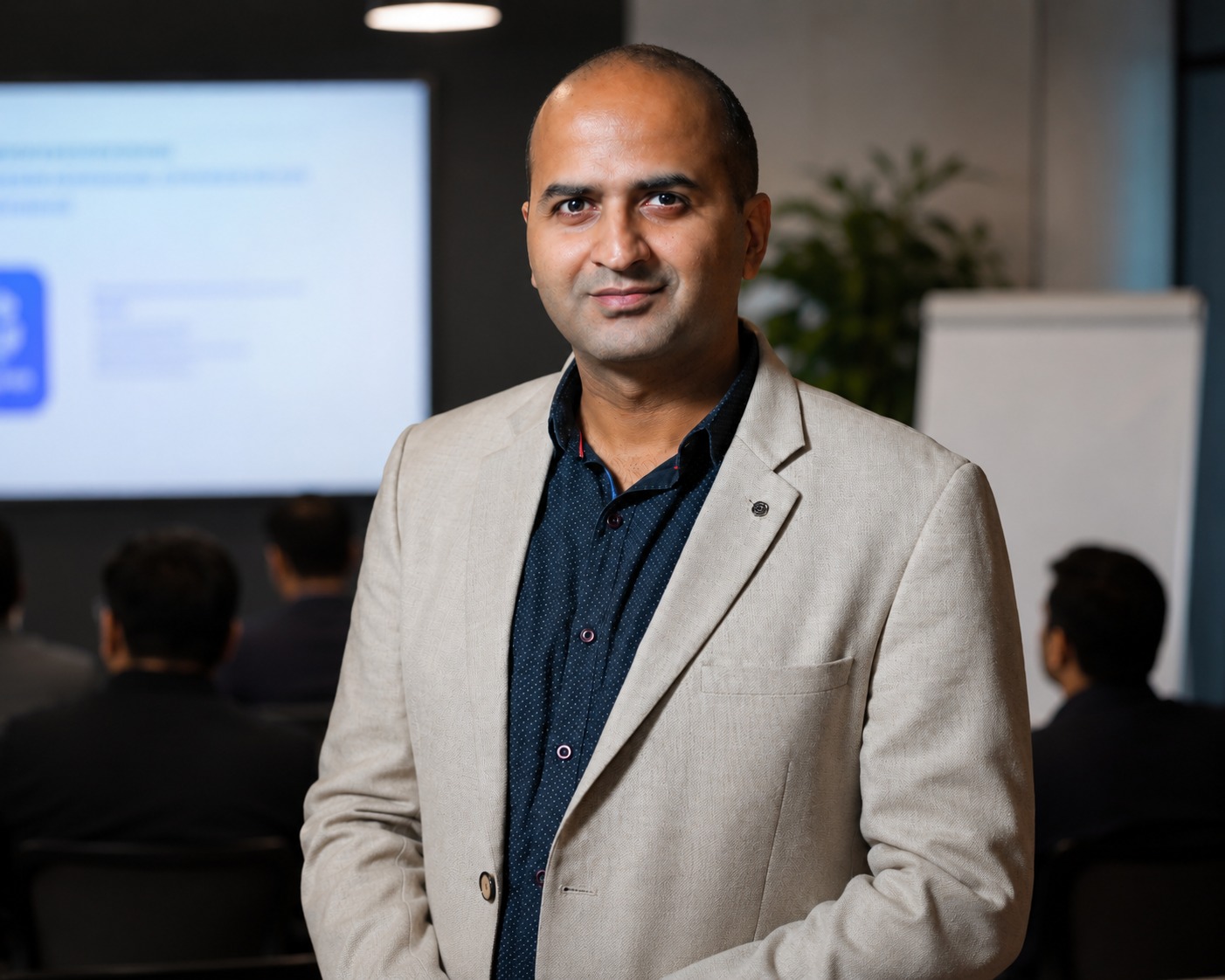
17+Years in tech, business and teachingHitesh Motwani
Why Hitesh
Practical training that gets deployed
Corporate AI trainer · Author of Generative AI 360°
Hitesh’s sessions are hands-on, on people’s own work. Engineers bring their repos, documents and backlogs, and build on them in the room. They leave with code, evaluations and a deployment plan they use the next morning, not a folder of exercises.
That matters because time saved compounds. An engineer who ships a working retrieval pipeline this week ships the next one faster, and a team that learns to evaluate and deploy together moves from pilot to production in less time across every project that follows.
Before generative AI, Hitesh led digital and data work across BFSI, advertising and insurance, at HDFC, HSBC, DSP BlackRock, Ogilvy and Rediffusion Y&R, including digital work for Ratan Tata and the Twitter India launch. His work today centres on LLMs, AI agents, prompt engineering and automation, with leadership-focused AI training for founders and CXOs.
- 200,000+ professionals trainedacross 16+ countries, 4.8★ average session rating
- Corporate clientsinclude Google, Microsoft & Tata Group
- AuthorGenerative AI 360° (ZebraLearn, 2025)
- Visiting faculty9 IIMs including IIM Bangalore, University of London and K J Somaiya Institute of Management
- Teams trainedInfosys, Wipro, Flipkart, Amazon India, TCS, ICICI Lombard, Siemens India, HDFC Bank, Shemaroo and upGrad
- DeliveryOnsite in India and the UAE; live online elsewhere
In the room
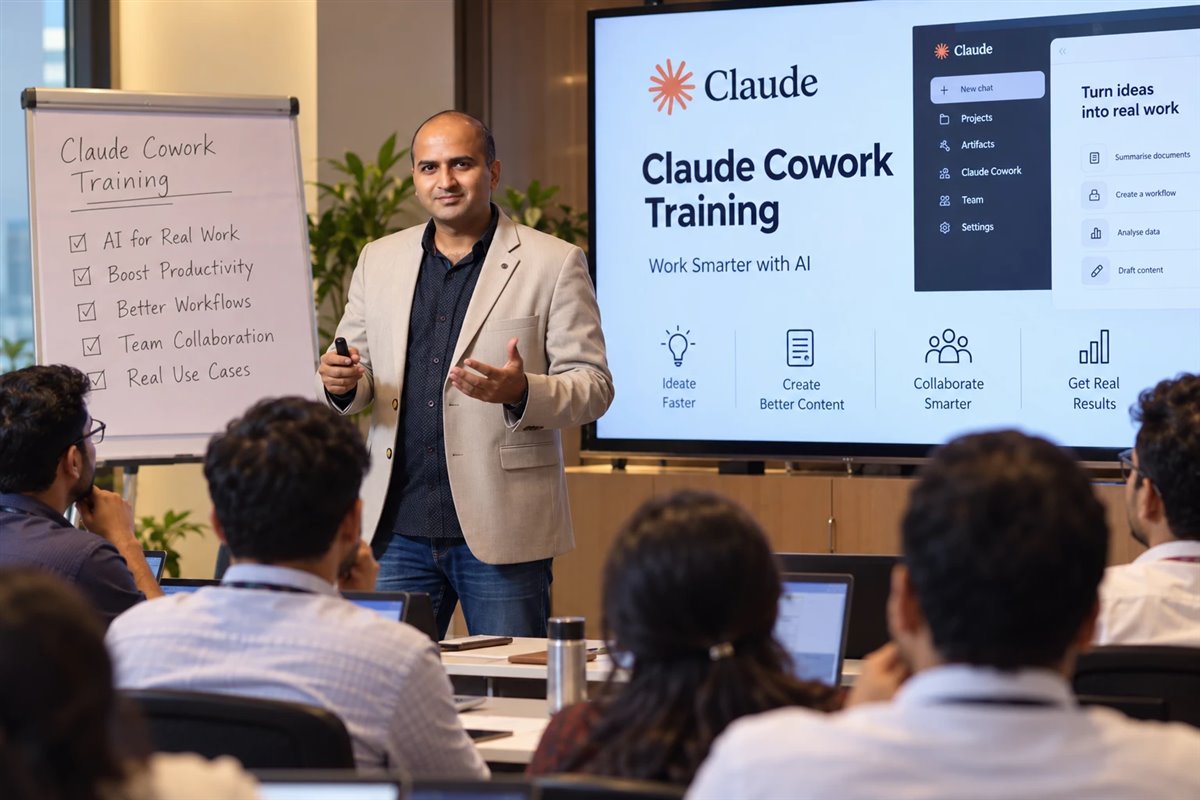
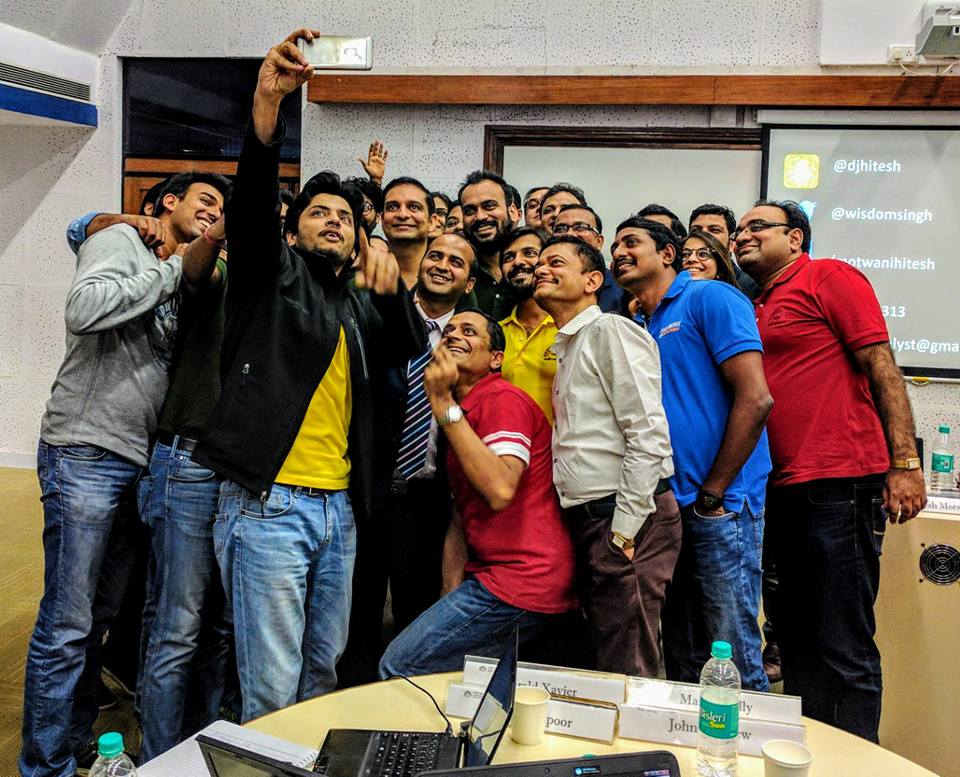
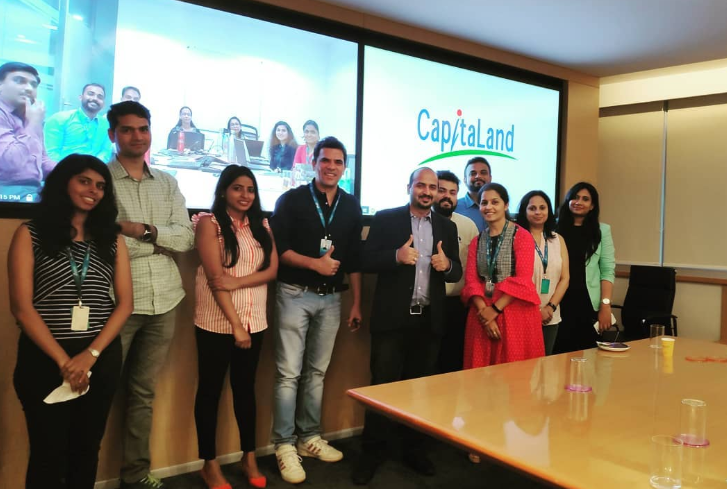
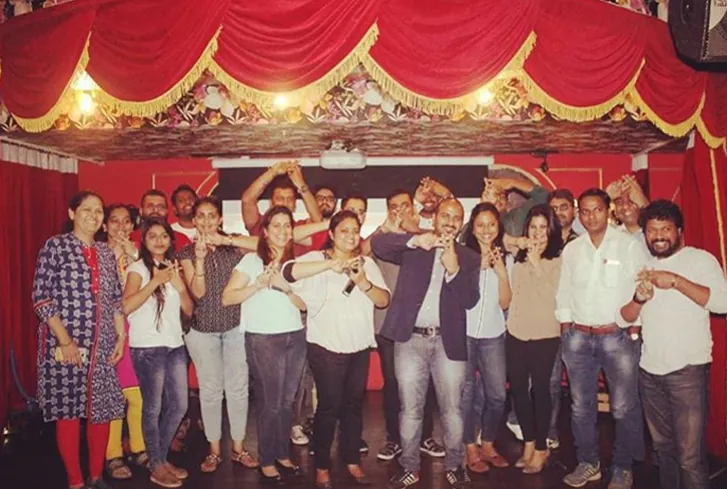
Hitesh Motwani's sessions
Real sessions, including two in Bengaluru. The 2019 photos are from Hitesh’s digital-marketing training years and are captioned with the client.
What people say
From participants and learning leaders
★★★★★
“Hitesh teaches like a practitioner, not a lecturer. Our engineers left able to scope and ship, not just talk about AI. Easily the most practical trainer we’ve brought in.”
LL&D LeaderEnterprise client
★★★★★
“He makes the hard parts land. The deployment and adoption frameworks were things our team could use the very next week.”
EEngineering HeadSystems integrator
★★★★★
“One of the best GenAI sessions I’ve attended — energetic, concrete, and grounded in real enterprise work. You can tell he’s actually done it.”
WWorkshop participantCohort graduate
FAQ
FDE training in Bangalore: questions answered
Can’t find what you need? Send a line through the form or message the team on WhatsApp.
FDE training prepares engineers for the forward deployed engineer role: building and deploying AI or software inside a customer’s business and getting it used. It covers retrieval (RAG), AI agents, evaluations, production deployment and customer discovery, not just prompting.
Engineering teams can run this FDE course at their own Bengaluru office, with in-person lab days and live online sessions in between. Individual engineers in Bangalore take it as 1-to-1 coaching online, so there is no commute or fixed batch.
Yes. The programme is designed for working engineers: team cohorts are scheduled with your employer around delivery commitments, and 1-to-1 coaching is arranged around your own working hours by agreement.
Yes. Corporate programmes combine live virtual sessions with in-person lab days at your Bengaluru office. Hitesh travels from Mumbai for onsite days, and 1-to-1 coaching for individuals runs online.
An FDE runs discovery with a customer team, gets access to their data and systems, builds an integration, retrieval pipeline or agent, evaluates it, deploys it with monitoring and guardrails, and then helps people adopt it, feeding lessons back to the product team.
A software engineer builds the core product for all customers. A solutions engineer mainly supports the sale with demos and proofs of concept. An FDE writes production code inside one customer’s business and stays accountable until the system is used.
Cohorts are usually run for one company’s engineering team. Individual engineers can book 1-to-1 coaching built around their own plan. No fixed public batch dates are published on this page.
Working engineering skills: comfortable Python, basic SQL, and experience calling APIs. FDEs write production code, so the programme builds the AI, deployment and customer skills on top of that base rather than teaching programming from scratch.
It is possible but uncommon, because most FDE roles ask for experience. A practical route is an implementation, solutions or associate engineering role first, building RAG, agent and evaluation projects along the way.
From a half-day introduction to a multi-week cohort. Longer formats cover all seven modules and end with a capstone on a real brief; shorter formats focus on one or two modules and a working prototype.
It is vendor-neutral: Python, the OpenAI, Anthropic Claude and Google Gemini APIs, open-weight models such as Llama, a vector database or your existing search, an agent framework or MCP, and your own cloud. Corporate cohorts use the tools your company already licenses.
Yes. Engineers who complete the capstone receive the Skillopedia Forward Deployed Engineer certificate. It is a training certificate, not an affiliation with Palantir, OpenAI or Anthropic, and employers do not require any FDE certification.
As of October 2026 there is no industry-standard forward deployed engineer certification that employers require, and this programme is not affiliated with Palantir, OpenAI or Anthropic. Hiring managers judge FDE candidates on shipped systems, evaluations and how they work with customers.
No. This is skills training, not a placement programme, and no job, placement or salary outcome is promised. What you leave with is working code, an evaluation report and a deployment write-up you can show.
Fees depend on format, group size, duration and customisation. Corporate programmes usually follow a day-rate model, with travel for onsite days at actuals. Send the form or book a free call and you will get a written proposal.
There is no single best course for everyone. Compare courses on four things: whether you build and deploy on real data, whether evaluations and production skills are taught, whether customer discovery is included, and whether the trainer has delivered hands-on corporate programmes. This programme suits working engineers and teams who want those four.
Related
More on forward deployed engineering
Your move
Ready to build forward deployed engineers in Bengaluru?
Bring your goal to a short call: who is learning, the stack you use and the systems you want in production. You get a written plan built around that real work.
Pick a time for a free call
Choose a slot that suits you. The call is free and there is no obligation.
Calendar not loading? Open the booking page.
Enquire
Send an enquiry
Tell us whether this is for you or your team, and what you want to build. Every enquiry gets a personal reply, usually within one business day.
- Corporate cohorts, workshops and leadership briefings
- 1-to-1 FDE coaching for engineers
- Email hitesh@skillopediagroup.com
- Call +91 98924 14313