












FDE course · 2026For engineers, tech leads and engineering teams

Forward Deployed Engineer Course: learn to ship AI that people actually use

Quick answer: this forward deployed engineer (FDE) course takes working engineers from “I can call a model” to “I can deploy an AI system inside a business and get it adopted”. It runs over seven modules and a capstone built on your own work: discovery, architecture, RAG, AI agents, evaluation, production and adoption. Take it as 1-to-1 coaching or as a cohort for your team, live online or onsite in India and the UAE.

  • ✓
    Seven modules plus a capstone — on your repo, data and problem
  • ✓
    Individuals or teams — 1-to-1 coaching or cohorts of 15–25
  • ✓
    Skillopedia FDE certificate — for a panel-reviewed capstone

Still deciding? See the full syllabus, how it compares or book a free call.

200,000+
professionals trained
16+
countries
17+
years training
4.8★
avg. session rating
Hitesh Motwani, trainer of a hands-on forward deployed engineer course
Python & APIsRAGAI agentsMCPEvalsAdoption
DeliveredLive online · onsiteIndia, the UAE and worldwide
Clients includeGoogle · Microsoft& Tata Group
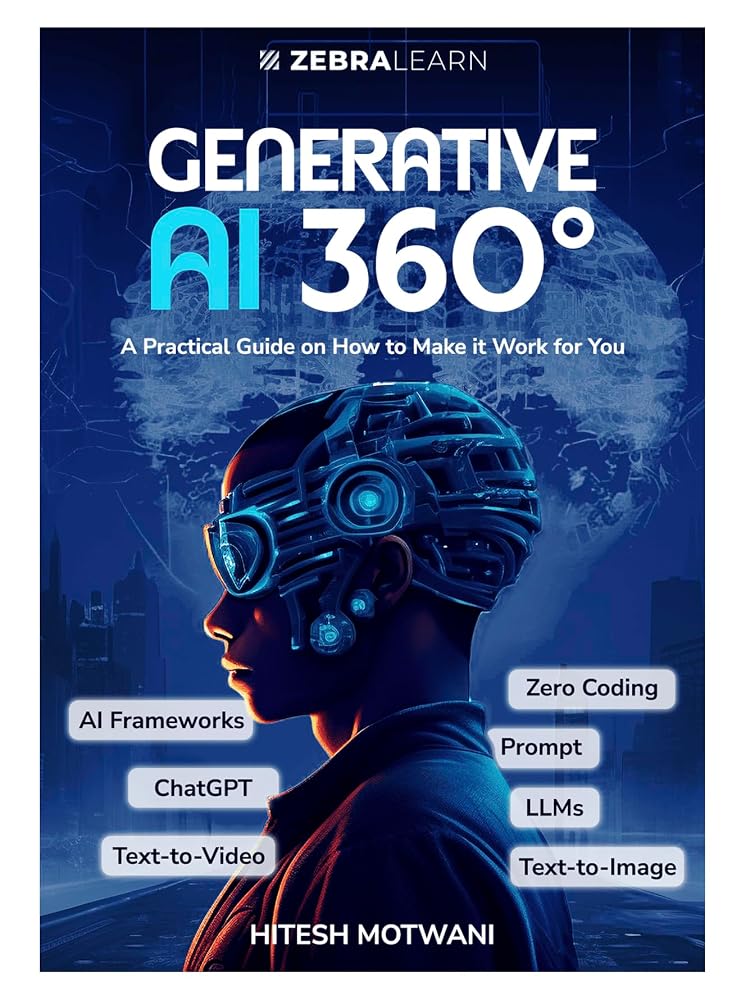
Generative AI 360 book cover
AuthorGenerative AI 360°

Teams at these organisations have trained with Hitesh Motwani and Skillopedia

  • Google
  • Microsoft
  • Siemens
  • Samsung
  • Sony
  • Pfizer
  • LG
  • HP
  • Hewlett Packard Enterprise
  • GE Aerospace
  • Marks & Spencer
  • Adani Group
  • Ogilvy
  • RPG Group
  • Endemol Shine India

200,000+ professionals · 16+ countries · 4.8★ average session rating · Corporate clients include Google, Microsoft & Tata Group

Course at a glance

The FDE course in eleven facts

Everything people ask before they enquire: who it suits, what you need to know already, how it runs and what you walk away with.

Course detailWhat you get
Who it is forWorking software, data, ML and solutions engineers, tech leads, and teams whose engineers are moving into client-facing AI delivery
PrerequisitesWorking Python (or another general-purpose language), REST APIs and Git. Basic SQL helps. No prior LLM, RAG or agent experience needed
SyllabusSeven modules: GenAI foundations, enterprise architecture, AI agents, RAG, real AI products, the deployment framework and frontier platforms
CapstoneA deployed RAG or agent service for a real brief from your own work, with a discovery document, evaluation set and 90-day adoption plan
FormatsHalf-day primer, full-day build bootcamp, multi-week cohort, custom corporate programme, or 1-to-1 coaching
DeliveryLive online worldwide; onsite at your office in India or the UAE, with live online labs between onsite days
Group size15–25 engineers per team cohort; 1-to-1 for individuals
CertificateSkillopedia Forward Deployed Engineer certificate for a panel-reviewed capstone. A training certificate, not a vendor credential
FeesQuoted per engagement after a short scoping call; team cohorts usually on a day-rate model, 1-to-1 coaching quoted per package
LanguageEnglish and Hindi
PlacementNone. This is skills training; no job, placement or salary outcome is promised

What makes it different: every lab and the capstone use a problem from your own job, so what you build keeps working after the course. If you want the wider picture of the role first, read the 90-day forward deployed engineer roadmap.

Who it is for

Who should take a forward deployed engineer course

The FDE seat mixes engineering, consulting and ownership. The course suits people who already build software and now need to make AI work inside a real business.

Individual engineers

  • Backend, platform or full-stack engineers with a couple of years of experience who want applied AI work
  • Data scientists and ML engineers who need production, integration and stakeholder skills
  • Solutions, sales or customer engineers who want to build what they currently only demo
  • Consultants and delivery leads who own AI engagements and want hands-on depth

Engineering teams

  • IT services and consulting firms building a bench of engineers who deploy AI for clients
  • Global capability centres asked to take AI from pilot to production for the parent company
  • Product companies that embed engineers with their largest customers
  • Enterprise IT teams that want an internal FDE group instead of relying on a vendor for every deployment

It is probably not right if you

  • Are new to programming: build Python and API basics first
  • Want a certificate to stand in for experience: employers hire FDEs on shipped work
  • Need a placement service or fixed public batch dates
  • Only want AI skills for everyday office work: see the AI Accelerator Program instead
Prerequisites

What you need to know before you start

The course assumes you can already build software. It does not assume any AI background. A short skills check before kick-off sets the starting depth.

SkillNeeded on day oneBuilt during the course
ProgrammingWorking Python or a similar language: functions, packages, reading other people’s codeAsync calls, streaming, structured outputs, testing AI code
APIs and dataCalling a REST API, reading JSON, basic SQLConnecting models to internal systems through tools and MCP
Version controlGit basics: branch, commit, pull requestReviewing AI-generated code safely
CloudKnow what a container, a secret and a log areDeploying, monitoring and costing an AI service on your cloud
AINothing beyond curiosityLLMs, RAG, agents, evaluation, guardrails
People skillsWillingness to ask a business user awkward questionsStructured discovery, scoping and adoption planning

Quick self-check: if you can write a small script that calls an API, filters the result and saves it, and you have a real problem with sample data to work on, you are ready.

Syllabus · No obligation
Want the detailed syllabus? Tell us where you are starting.

Share a line about your experience (or your team), the stack you use and the system you would like to deploy. You will get the module plan at the right depth, a suggested capstone brief and a quote. Prefer to talk first? Book a free call.

  • ✓Labs on your own repo, data and problem
  • ✓1-to-1 coaching or a cohort for your team
  • ✓Live online, or onsite in India and the UAE
Syllabus

FDE course syllabus: seven modules and a capstone

Each module pairs a short explanation with a lab on your own work. The order below is the reference path; depth and sequence are tuned to your skills check and stack.

01Foundations

Generative AI for engineers

How large language models behave and fail, the current model families from Anthropic, OpenAI, Google and open-weight providers, structured prompting, and why every prompt needs a test set before it ships.

You build: a small evaluation harness and a map of where AI could help in your own business unit.

02Architecture

Enterprise AI architecture

Fitting AI into real company systems: APIs, data pipelines, identity and permissions, cloud services and the security questions an IT team will ask. A simple framework for choosing between RAG, agents, fine-tuning and plain code.

You build: a one-page architecture for your capstone, reviewed in the session.

03Agents

AI agents and automation

Tool calling, orchestration, human approval steps and multi-agent workflows. Connecting models to internal tools through MCP and connectors, and deciding when an agent is the wrong answer.

You build: an agent that completes one real task from your workflow with a person signing off.

04Retrieval

RAG and knowledge systems

Chunking, embeddings, vector and hybrid search, re-ranking, citations and document-level access control, plus how to tell whether retrieval or generation is causing a bad answer.

You build: a grounded assistant over your own documents, with a retrieval test set.

05Products

Building real AI products

Turning a working notebook into something people use every day: streaming, authentication, rate limits, caching, model routing and a usable interface. Patterns for support, sales, finance, HR and meeting workflows.

You build: a small internal tool your colleagues can log into and try.

06Deployment

The FDE deployment framework

Discovery workshops with stakeholders, scoping and pushing back, observability, guardrails, red-teaming basics, cost control, and the change management that turns a launch into a habit.

You build: a discovery document, a monitoring view and a draft 90-day adoption plan.

07Platforms

Working with frontier AI platforms

Comparing the Claude, OpenAI and Gemini APIs and their agent tooling, AI-assisted coding with tools such as Claude Code, Cursor and GitHub Copilot, and judging vendor features against your requirements.

You build: a short vendor comparison for your use case that a manager can act on.

CCapstone

Capstone on your own work

One end-to-end delivery: brief, discovery, build, evaluation, deployment and adoption plan, presented to a review panel. It pulls every module together on a problem you chose.

You build: a deployed service and the documents an FDE hands to a business owner.

How every module runs

  • Explain: a short, practical briefing, never a lecture series
  • Demo: the pattern built live, including the mistakes people usually make
  • Lab: you apply it to your own repo, data or process
  • Review: Hitesh checks architectures, prompts and evaluation results in the session
Capstone

A capstone built on your own work

The capstone is where the course stops being a course. You take a problem that matters to you or your employer and deliver it the way an FDE would, from the first conversation to the adoption plan.

StageWhat you doWhat the panel looks for
1. BriefPick a real problem from your job or company and write it down in the business owner’s wordsA problem someone actually has, with a person who would use the fix
2. DiscoveryInterview the owner and users, map the current process and agree what “better” meansA scoped problem and a measurable target, not a feature list
3. DesignChoose the pattern (RAG, agent, workflow or plain code) and sketch the architectureA defensible choice, with data access and security thought through
4. BuildImplement the smallest version that solves the problem end to endWorking code that runs on your stack, not only in a notebook
5. EvaluateBuild a test set from real examples and measure accuracy, refusals and costHonest numbers, and fixes for the worst failure modes
6. DeployShip it with logging, monitoring and guardrailsSomething a colleague can use without you sitting beside them
7. AdoptWrite a 90-day adoption plan and present it to the panelA named owner, training for users and a way to see whether it is used

An illustrative capstone brief

“Our customer-success team spends most of Monday answering the same contract and billing questions from three systems.” A participant interviews the team, finds that four question types cover most of the volume, and builds a retrieval assistant over the contract library with a read-only billing lookup. A test set of past questions shows where it fails; refunds are routed to a person. The adoption plan names the team lead as owner.

That example is illustrative, not a promised result. Where company data is sensitive, labs use masked or synthetic copies under your NDA, and the code stays yours or your employer’s.

Format, duration and delivery

How the FDE course runs: format, duration and delivery

There are no fixed public batch dates for this course. It runs when you or your team are ready, at a pace that fits real work, and the length depends on the format you choose.

FormatTypical lengthBest forWhere
1-to-1 coachingA series of online sessions, paced around your working hoursAn individual engineer working towards FDE-style work, with reviews of their own buildsLive online
Half-day primer3–4 hoursEngineers and leads deciding what FDE work would mean for themOnsite or live online
Full-day build bootcamp6–7 hoursA team going from idea to a working prototype on its own dataOnsite preferred
Multi-week cohortSeveral sessions over a number of weeksThe complete course: seven modules, capstone and certificateOnsite kick-off, live online labs
Custom corporate programmeAgreed with youSeveral cohorts or locations, rebuilt around your engagement typesYour offices in India or the UAE, or online

Live online

  • Interactive sessions, not recorded videos: you share your screen and get feedback
  • Labs between sessions, reviewed at the next one
  • The default for 1-to-1 coaching

Onsite

Fees: the course is quoted per engagement, because format, group size, number of sessions, lab environment and travel all change the work. Team cohorts usually follow a day-rate model with a 50% advance on confirmation; 1-to-1 coaching is quoted as a package. You see a written proposal before you commit. Individuals: you can also join a cohort your employer runs, so it is worth asking your L&D team first.

Certificate

Does the FDE course come with a certificate?

Yes. Engineers who complete the capstone and pass the panel review receive the Skillopedia Forward Deployed Engineer certificate. Be clear about what that is: a training certificate that records a reviewed, deployed project. It is not an Anthropic, AWS or Palantir credential, and no employer requires a particular FDE certificate.

CredentialFromHow you get it
Skillopedia Forward Deployed Engineer certificateThis courseComplete the capstone and pass the panel review
Claude Frontier Academy badgesAnthropicEmployer nomination, a graded practical and a residency; not an open exam
FDE validated certification and advanced credentialAWSFree learning pathways on AWS Skill Builder
Certified Forward Deployed Engineer (CFDE)ADaSciAn exam-based, third-party credential

Hiring managers judge FDE candidates mainly on what they have shipped and how they talk about it. That is why the capstone produces a write-up you can discuss in an interview: the problem, the architecture, the evaluation numbers and what changed for users. For a detailed, sourced look at vendor programmes, see the FDE certification guide on Hitesh’s FDE trainer page.

How it compares

FDE course options compared honestly

There is no single right FDE course. The best choice depends on whether you need a credential, a career change or the ability to deploy AI in the job you already have.

OptionExample (checked 26 Oct 2026)Length and formatStrengthWatch for
Self-paced online courseFDE courses on Educative and UdemyHours to weeks, at your own paceCheap, flexible, good for conceptsNobody reviews your work; no real stakeholders
University-linked certificateIIT Delhi CEP Advanced Certificate in AI Forward Deployed Engineering6 months, 145 hours, weekend live online; listed at ₹1,65,000 + GSTAn institution’s certificate and a structured syllabusHow much of the work is on your own systems
Long online career programmeScaler AI Forward Deployed Engineer Program12 months, live and mentor-led; listed at ₹3,99,000Breadth, mentoring, career servicesTime commitment and how career claims are worded
Immersive cohortMasai Leap AI FDE4 days in Goa, 10 weeks online and a Bengaluru hackathon; ₹1.5 lakh + GSTIntense, peer-drivenFixed dates and travel
Vendor pathwayAWS Skill Builder FDE pathways; Anthropic Claude Frontier AcademySelf-paced (AWS); employer-nominated residency (Anthropic)Deep on one vendor’s platformEligibility, and less on discovery and adoption
This courseHitesh Motwani, 1-to-1 or team cohortHalf-day to multi-week, live online or onsite; quoted per engagementBuilt on your own work and stack, with in-session reviews and a panel capstoneNo public batches and no placement service

Third-party details are taken from the providers’ own pages and change often. Confirm dates and fees with each provider before you enrol. More options are compared in AI bootcamps in India.

Six questions to ask any FDE course

  • Will I build and deploy on real data, or only in a sandbox?
  • Is discovery with stakeholders practised, or only mentioned?
  • Are evaluation, security and cost control taught hands-on?
  • Who reviews my code, and how many learners share that reviewer?
  • What exactly does the certificate say I did?
  • Does anyone promise a job or salary? If so, read the small print
Career context

Where an FDE course fits in your career

Forward deployed engineering grew out of Palantir’s practice of sending engineers to work inside customer organisations. Generative AI turned it into one of the most talked-about roles in tech: AI companies, cloud providers, IT services firms and global capability centres all need engineers who can make models work inside messy, real processes. Most openings still ask for several years of engineering experience, so treat the role as a direction you grow into rather than a job a course hands you.

A sensible path is to strengthen your engineering base, ship two or three small AI systems that real people use, and practise the client side of the job: discovery, scoping, explaining trade-offs and driving adoption. The forward deployed engineer roadmap lays that out as a 90-day self-study plan, and the course is the guided, reviewed version of the same journey. For a view of how FDE pay compares with other roles, see the highest-paying AI jobs in India. No course can promise a particular job or salary, and this one does not.

Your trainer

Why learn FDE skills with Hitesh Motwani

Portrait of Hitesh Motwani, FDE course trainer, in a light blazer

Hitesh Motwani, Mumbai and Dubai

Hitesh’s training has one rule: people practise on their own work. In this course that means your repository, your documents and your stakeholders, with architectures, prompts and evaluation results reviewed in the session rather than weeks later. You leave with a system that runs and habits you use the next morning, and because each deployment teaches the next one, the time saved compounds.

200,000+ professionalsTrained across 16+ countries, 4.8★ average session rating
Google, Microsoft & Tata GroupAmong his corporate clients
Author, Generative AI 360°ZebraLearn, 2025
17+ years trainingVisiting faculty, K J Somaiya Institute of Management
  • Expertise in LLMs, AI agents, prompt engineering and automation
  • A practical, deployment-based approach: every module ends with something running
  • Earlier career in digital and data work across BFSI, advertising and insurance, so discovery is taught from the business side as well
  • Leadership briefings for CTOs and founders before or alongside a team cohort
★★★★★
“Hitesh’s depth of understanding on how the generative AI space is changing and how to write perfect prompts was awesome.”
MG
Mahesh GawdeMarketing Manager, Pristine Infosystem
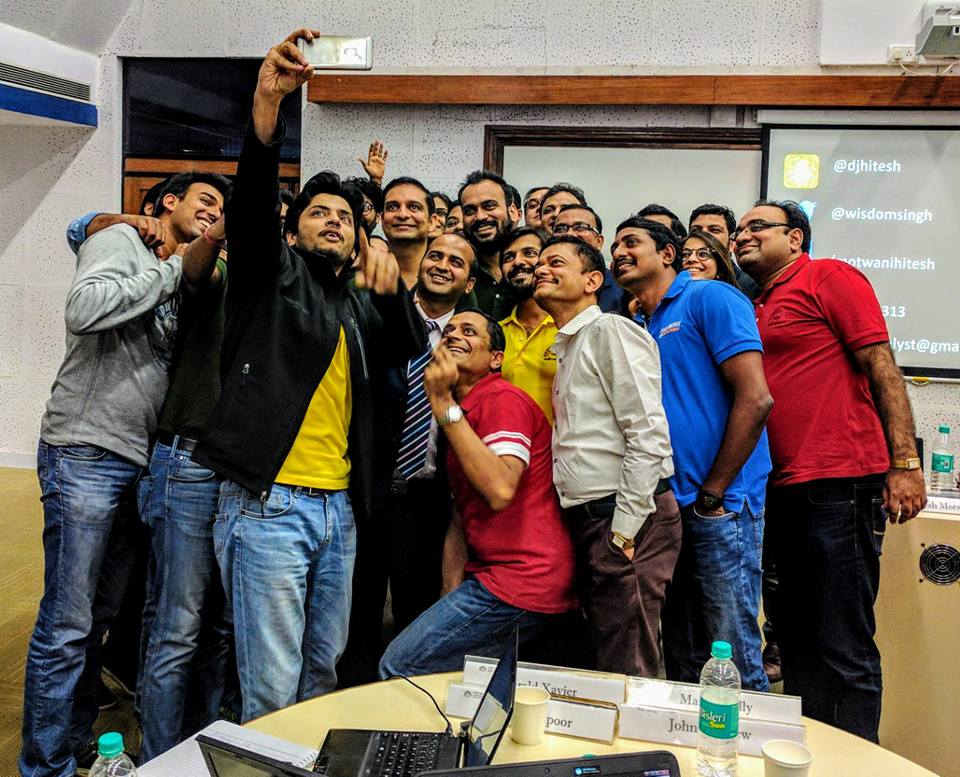
Hitesh Motwani running a hands-on AI build session where participants work on their own tasks

Hands-on AI build session, India

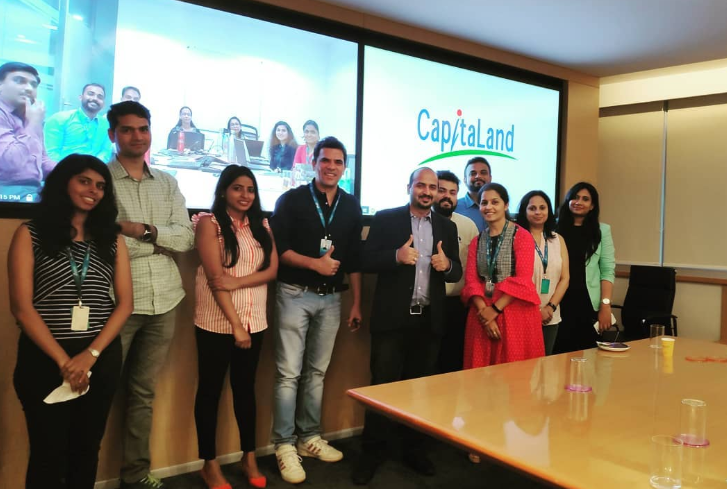
Hitesh Motwani running a corporate training session for the CapitaLand team in Bengaluru

Corporate training, CapitaLand, Bengaluru

Hitesh Motwani teaching senior executives at an IIM Bangalore CMO workshop

CMO workshop, IIM Bangalore

Hitesh Motwani, AI trainer, during a corporate training session

Hitesh Motwani in a training session

How to join

From first message to your first lab

Four steps, usually completed within a couple of weeks for individuals; team cohorts depend on your calendar.

11Step 1

Free call or form

Tell us about your experience or your team, your stack and what you would like to deploy. A fifteen-minute call is enough.

22Step 2

Skills check

A short practical check, so the course starts where you actually are instead of at slide one.

33Step 3

Written proposal

Module plan, format, capstone brief, schedule and fees, for you or your manager to sign off.

44Step 4

Kick-off

Environment set up on your stack, the first discovery exercise, and your first lab before the end of the week.

FAQ

Forward deployed engineer course: common questions

The questions engineers and engineering managers ask most before they sign up. Have another one? Send it and you will get a straight answer.

Ask a question →

It is training for the forward deployed engineer role: building and deploying AI inside a real business and getting people to use it. A good FDE course covers discovery with stakeholders, architecture, RAG, AI agents, evaluation, production deployment and adoption, and ends with a capstone you actually ship.

Seven modules: generative AI for engineers, enterprise AI architecture, AI agents and automation, RAG and knowledge systems, building real AI products, the FDE deployment framework, and working with frontier AI platforms, followed by a capstone on your own work. See the syllabus.

Working software, data, ML and solutions engineers who want applied AI work, consultants who own AI engagements, and engineering teams that need to take AI from pilot to production. It is not designed for people who are new to programming.

Working Python or a similar language, REST APIs and Git. Basic SQL and cloud awareness help. You do not need prior experience with LLMs, RAG or agents; the course builds that.

It depends on the format: a half-day primer is 3–4 hours, a full-day bootcamp 6–7 hours, and the complete course with capstone runs as a multi-week cohort or a series of 1-to-1 sessions. The exact schedule is set in your proposal.

Yes. It runs live online worldwide, and 1-to-1 coaching is always online. Team cohorts can also be delivered onsite at your office in India or the UAE, with live online labs between onsite days.

Both. Individuals take the course as 1-to-1 coaching built around their own project, or join a cohort their employer runs. Companies book cohorts of 15–25 engineers. There are no fixed public batch dates.

Yes. Complete the capstone and pass the panel review to receive the Skillopedia Forward Deployed Engineer certificate. It is a training certificate, not a vendor credential from Anthropic, AWS or Palantir. See certificates.

Fees are quoted per engagement because format, group size, sessions and travel change the work. Team cohorts usually follow a day-rate model; 1-to-1 coaching is quoted as a package. Send the form for a written quote.

No. It is skills training. You leave with a deployed project, an evaluation report and a write-up you can discuss in interviews, but no job, placement or salary outcome is promised. Be cautious of any course that guarantees one.

It is possible but uncommon, because most FDE roles ask for experience. Freshers usually do better building programming fundamentals first, then moving into implementation or solutions roles. The FDE roadmap sets out a path.

Not as an open exam. Anthropic’s Claude Frontier Academy, announced in October 2026, admits engineers nominated by organisations working with Anthropic. AWS offers FDE pathways on Skill Builder, and ADaSci offers an exam-based CFDE credential.

A grounded assistant over your own documents, an agent that completes a real task with human sign-off, an evaluation harness, a small internal tool, and a capstone service with its discovery document and 90-day adoption plan.

Hitesh Motwani, a corporate AI trainer and author of Generative AI 360°, with 17+ years in training. He has trained 200,000+ professionals across 16+ countries, and his corporate clients include Google, Microsoft and Tata Group. More on the about page.

Your next step

Stop building demos. Start deploying AI people use.

Bring the problem you would most like to solve with AI, the stack you work in and how much time you have. You will get a course plan at the right depth and a capstone brief built on your own work.

1-to-1 coaching online · Team cohorts onsite in India and the UAE or live online · English and Hindi

Free call · No obligation

Pick a time for a free call

Choose a slot that suits you. The call is free, takes about fifteen minutes and there is no obligation.

Calendar not loading? Open the booking page.

Free proposal · No obligation
Ready to build your first deployed AI system? Send your brief.

Tell us whether the course is for you or for a team, how much engineering experience is involved and what you want to ship. You will get a written outline, the format that fits and a quote.

  • ✓Module plan matched to a skills check
  • ✓A capstone brief tied to your work
  • ✓Reply from Hitesh’s team, usually within one working day
Scroll to Top