01Models
Generative AI and LLMs
How current models from Anthropic, OpenAI, Google and open-weight providers behave, structured prompting, and evaluation with test sets.
For the business: engineers who choose models on evidence, not hype.
Quick answer: forward deployed engineering (FDE) corporate training turns a group of your engineers into an in-house bench that can take AI from pilot to production inside your business units or for your clients. Hitesh Motwani designs it around your stack, your data rules and your engagement types: a leadership briefing, hands-on workshops, multi-week cohorts with a capstone, and advisory while the first deployments go live.
Training just yourself? The forward deployed engineer course has 1-to-1 coaching for individual engineers.


Teams at these organisations have trained with Hitesh Motwani and Skillopedia













200,000+ professionals · 16+ countries · 4.8★ average session rating · Corporate clients include Google, Microsoft & Tata Group
What a CTO, GCC head or L&D lead needs to know before a first call. Everything is confirmed in a written proposal after scoping.
| Question buyers ask | Answer |
|---|---|
| What is it? | A company programme that builds forward deployed engineering capability: engineers who can scope, build, evaluate, deploy and drive adoption of AI systems |
| Who buys it? | IT services and consulting firms, global capability centres, product companies with large customers, and enterprise IT teams |
| Engagement options | Keynote or leadership briefing, corporate workshop, multi-week cohort with capstone, and advisory on building the FDE function |
| Cohort size | 15–25 engineers per cohort, so every lab gets reviewed; several cohorts for larger benches |
| Stack | Your cloud (Azure, AWS or GCP) and your models (Claude, OpenAI, Gemini or open-weight) |
| Data and IP | Work under your NDA with masked or synthetic data where needed; the code and artefacts stay yours |
| Delivery | Onsite at your offices in India and the UAE, live online worldwide, or a mix |
| Assessment | Deployed capstones reviewed by a panel that can include your own assessors; Skillopedia FDE certificate for those who pass |
| Commercials | Quoted per engagement on a day-rate model, 50% advance on confirmation, travel and stay at actuals |
Every organisation can buy the same models. What separates the ones getting value is the ability to deploy them: someone has to understand a messy process, choose the right pattern, connect it to real systems, prove it is safe and get people to change how they work.
| Route | Works well when | Trade-off |
|---|---|---|
| Hire experienced FDEs | You need a few senior people quickly and can compete on pay | Scarce, expensive and slow to hire; they still need to learn your business |
| Rely on vendor or partner engineers | A single, well-defined deployment with a clear end date | Knowledge leaves with them; every new use case is a new contract |
| Train your own engineers | You have capable developers who already know your systems and people | Needs a structured programme and real projects, not a video library |
| Blend: train a core, hire a few seniors | Most organisations scaling AI across several business units | Requires a clear operating model so both groups work the same way |
Most organisations start with a briefing or a workshop, then run cohorts once they know which engagement types matter most. Each option is tailored to your audience and outcomes.
| Engagement | Typical length | Audience | What you get |
|---|---|---|---|
| Keynote or talk | 60–90 minutes | Leadership offsites, engineering all-hands, client events | A shared understanding of the FDE role and why deployment, not model access, is the bottleneck |
| Leadership briefing | Half a day | CTOs, GCC heads, delivery and practice leaders | A build-or-hire view, an operating model sketch and the first engagement types to target |
| Corporate workshop | Half-day to two days | An engineering team or delivery pod | A working prototype on your data and a clear picture of the gaps to close |
| Cohort programme | Several sessions over a number of weeks | 15–25 engineers per cohort | The full curriculum, deployed capstones, panel review and certificates |
| Advisory | Agreed with you | The leader who owns the FDE function | Help with role design, selection, engagement playbooks and the first live deployments |
Tell Hitesh’s team how many engineers, which cloud and models, and the kinds of deployments they should own. You will get a suggested engagement mix, a programme outline and a quote. Prefer to talk first? Book a free call.
Strong FDE cohorts mix profiles, because the job mixes skills. Selection matters more than any single module: pick people the business already trusts and who are curious about other teams’ work.
| Profile | Why they fit | What they usually need most |
|---|---|---|
| Senior backend or platform engineers | Know your systems, security and deployment pipelines | Discovery, stakeholder handling and AI patterns |
| Data scientists and ML engineers | Comfortable with models and evaluation | Production engineering, integration and adoption |
| Solutions or pre-sales engineers | Already spend time with users and clients | Production-grade build depth beyond demos |
| Technical consultants and delivery leads | Own engagements and client relationships | Hands-on RAG, agents and evaluation |
Six capability areas, taught hands-on and assessed on a deployed capstone. Depth and order are set after a skills check of your cohort.
How current models from Anthropic, OpenAI, Google and open-weight providers behave, structured prompting, and evaluation with test sets.
For the business: engineers who choose models on evidence, not hype.
Retrieval, embeddings, hybrid search with re-ranking, citations and access control over your own documents.
For the business: assistants that answer from approved sources and show where answers came from.
Tool calling, orchestration, MCP connectors and multi-agent workflows with human checkpoints.
For the business: automation that completes real tasks without bypassing controls.
Running scoping workshops, finding the real requirement, and mapping a business need to the right architecture.
For the business: fewer pilots that solve the wrong problem.
Observability, guardrails, security reviews, cost control and shipping reliable AI services on your cloud.
For the business: systems your IT and risk teams can sign off.
Change management, a 90-day adoption plan and the metrics that show a system is used and worth keeping.
For the business: tools people use after launch, with a named owner.
Training only pays off when it ends in live deployments. This is the sequence most companies follow; larger organisations repeat phases two to four for each business unit or region.
Leadership briefing, choose two or three engagement types, agree data rules and select the first cohort with their managers.
Hands-on modules on your cloud and models, with every lab tied to a real brief from the business.
Each pod takes one capstone into a real business unit, with coaching, architecture reviews and evaluation checks.
Panel review of capstones, certificates, a report on what was built, and a plan for the next cohort.
With earlier practitioner work across BFSI, advertising and insurance, and training across pharma, FMCG, manufacturing and technology, Hitesh adapts examples, labs and case briefs to your sector and stack.
| Industry | Engagement types the cohort practises |
|---|---|
| Banking, insurance and financial services | Policy and product knowledge assistants, document checks, service-desk agents with strict access control |
| Pharma and healthcare | Search over SOPs and regulatory documents, medical-information triage with human review |
| FMCG and retail | Sales and distributor analytics assistants, catalogue and content workflows |
| Manufacturing | Maintenance and quality knowledge bases, procurement and supplier document workflows |
| IT services and GCCs | Client discovery simulations, delivery accelerators, finance and HR shared-services automation |
Illustrative engagement types, chosen with you during scoping. They are examples of what cohorts practise, not promised results.
Corporate FDE training touches real systems and data, so the rules are settled before the first lab, and the outcomes are reported in terms leadership understands.
| What L&D can report | Evidence |
|---|---|
| Capability | Skills check at kick-off compared with the panel-reviewed capstone |
| Systems built | A list of deployed services with their owners and business units |
| Quality | Evaluation results for each system: accuracy, refusals, cost per task |
| Adoption | Usage after 30 and 60 days against each adoption plan |
| Next steps | Engineers ready to lead the next cohort or engagement |
Use these six questions to compare providers. They separate programmes that build deployable skills from slide decks.
| Ask any FDE training partner | A strong answer looks like |
|---|---|
| Who will actually teach our engineers? | A named trainer whose sessions and background you can check |
| Will labs run on our stack? | Your cloud, your models, your data rules, from week one |
| Is discovery practised, or only mentioned? | Simulated and real stakeholder sessions, assessed in the capstone |
| How are engineers assessed? | Deployed capstones reviewed by a panel, with your assessors invited |
| What happens after the last session? | Live deployments with coaching, and a report on what was built |
| What do you guarantee? | Skills and artefacts, not jobs, badges or percentages |
Comparing named trainers? See the round-up of FDE trainers in India, or Hitesh’s FDE trainer page with a guide to Anthropic, AWS and ADaSci certifications. For a single engineer rather than a team, the FDE course for individual engineers runs as 1-to-1 coaching.
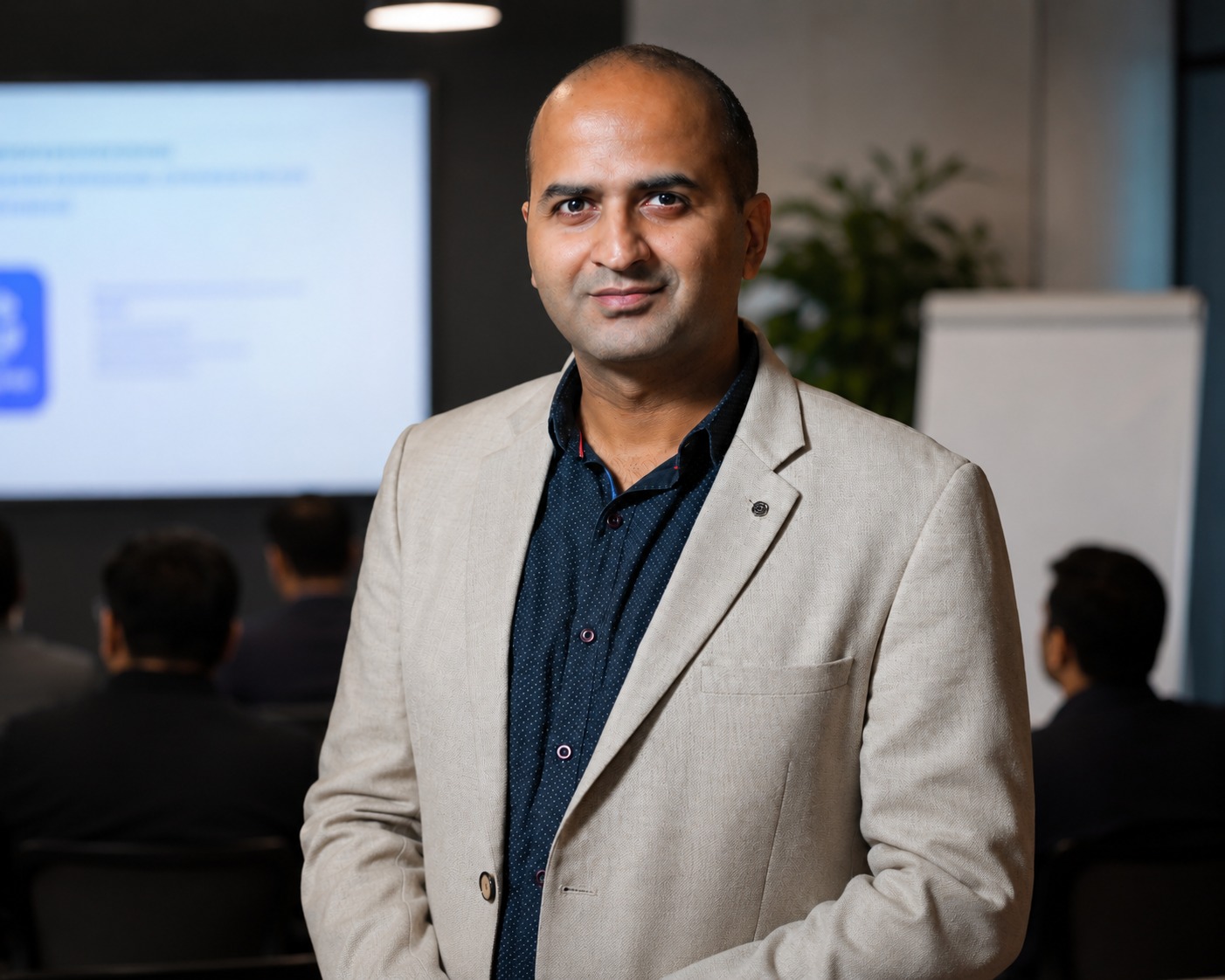
Hitesh Motwani, Mumbai and Dubai
Hitesh teaches deployment the way a field engineer lives it: on real work. Your engineers bring their repositories, documents and business problems, build on them in the room, and get architectures, prompts and evaluation results reviewed as they go. They leave with systems and habits they use the next morning, and each deployment makes the next one faster, so the whole organisation executes faster.
“Hitesh Motwani’s AI tools and ChatGPT training was a game-changer. Hitesh’s passion and simplified approach made the sessions engaging. … Hitesh is an exceptional trainer.”
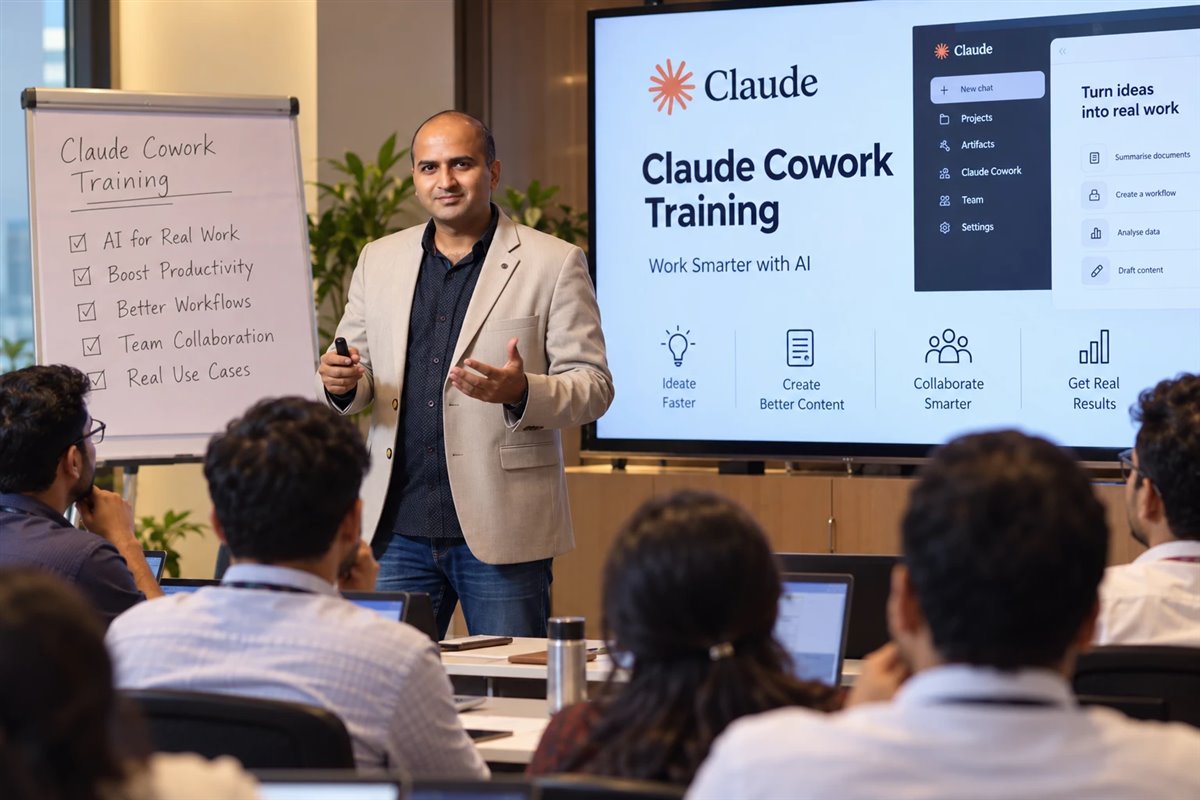
Hands-on AI workshop with a corporate team

Training CMOs, IIM Bangalore
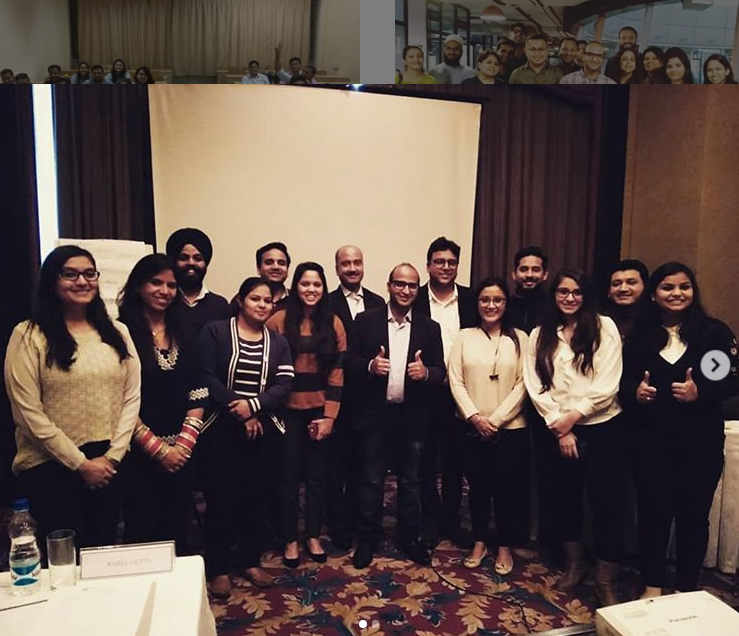
Corporate training, Delhi
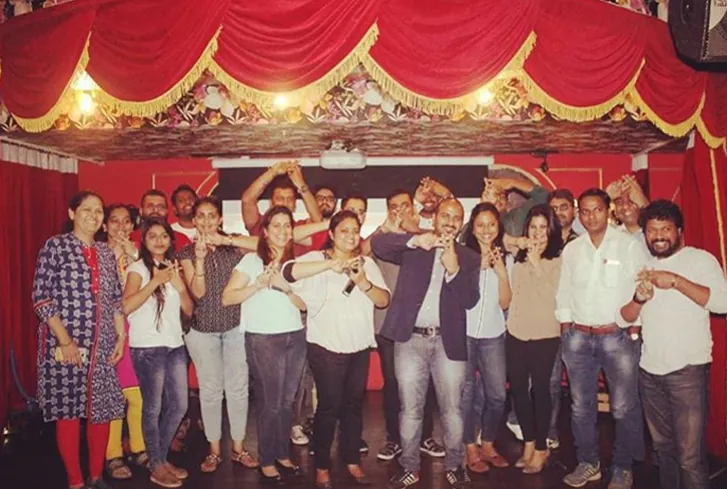
Hitesh Motwani in a training session
What engineering leaders and L&D teams ask before they commission an FDE programme. Have another question? Send it and you will get a straight answer.
It is a company programme that trains a group of engineers in forward deployed engineering: discovering the real problem with a business team, building RAG and agent systems on company data, evaluating and deploying them safely, and driving adoption. It ends with deployed capstones, not a quiz.
A corporate programme is designed around your stack, data rules and engagement types, runs as cohorts of 15–25, and includes bench design, a rollout plan and reporting for leadership. Individual engineers take the forward deployed engineer course as 1-to-1 coaching instead.
Keynotes and talks, half-day leadership briefings, hands-on corporate workshops from half a day to two days, multi-week cohort programmes with a capstone, and advisory on building the FDE function. Sessions run onsite or live online.
15–25 per cohort, so every lab gets reviewed. Larger benches run as several cohorts, by location or business unit.
Yes. Labs run on your cloud (Azure, AWS or GCP) and the models you have approved, whether Claude, OpenAI, Gemini or open-weight, using masked or synthetic data where needed.
Always. Examples, labs and capstone briefs are adapted to your sector, whether BFSI, pharma, FMCG, manufacturing, retail or technology, and to the engagement types your engineers will run. See industry examples.
Yes. He has delivered across 16+ countries. Onsite programmes run across India and the UAE and elsewhere by arrangement, with travel and stay at actuals; live online sessions are available anywhere.
Compare a skills check at kick-off with panel-reviewed capstones, then track the systems deployed, their evaluation results and their usage at 30 and 60 days. See what you can measure.
Engineers who pass the capstone review receive the Skillopedia Forward Deployed Engineer certificate, a training certificate. Vendor credentials such as Anthropic’s Claude Frontier Academy badges or AWS’s FDE certification are separate programmes.
It is quoted per engagement, because format, cohort size, duration and customisation change the work. Engagements usually follow a day-rate model with a 50% advance on confirmation, and travel and stay at actuals. Share a brief through the form for a written proposal.
Earlier is better for onsite dates, especially for several cohorts. Reach out any time and Hitesh’s team will check availability against your timeline.
Most organisations do both: train a core of engineers who already know the business and systems, and hire a few experienced FDEs to lead. See the build, hire or partner comparison.
Programmes, guides and city pages for engineering teams and the people who lead them.
Tell us how many engineers, which stack and which business units or clients they will serve. You will get an engagement mix, a cohort plan and a clear quote.
Onsite across India and the UAE · Live online worldwide · English and Hindi
Choose a slot that suits you. The call is free, takes about fifteen minutes and there is no obligation.
Calendar not loading? Open the booking page.
Share the size of the bench, the business units or clients it will serve and your timeline. You will get a written outline, the formats that fit and a quote.
WhatsApp us