Top 10 Corporate AI Training Companies & Providers for Employees (2026-27)
Quick answer: for company-wide, hands-on AI training, shortlist a live training partner that works on your employees’ real tasks (such as Hitesh Motwani, Edstellar or General Assembly) and pair it with a platform for scale (Coursera for Business, Great Learning or Simplilearn). Technical teams fit Scaler, Edureka or Intellipaat. Run a pilot with two teams before you buy seats for everyone.
- ✓10 real providers, each checked on its own site · formats, AI topics, customisation, sources
- ✓A buyer’s toolkit · rollout plan, skills framework, RFP questions, pricing models
- ✓No paid placements and no invented ratings · our own listing is disclosed
Want to talk it through? A free 30-minute call on your rollout. Book a free call · WhatsApp

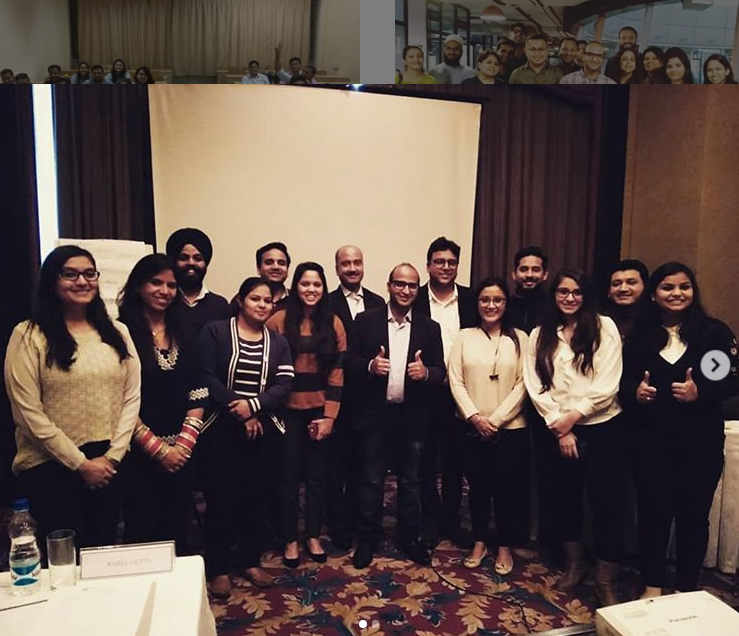
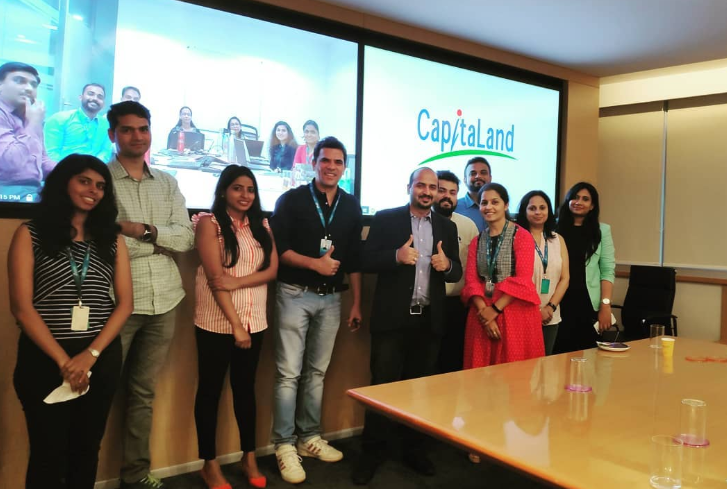
Compared by an AI trainer whose clients include teams at companies like these











The best AI training provider depends on what you are buying
“AI training for employees” can mean a two-hour awareness session, a licence to a course library, or a hands-on programme that changes how 2,000 people work. Most companies need a mix. Start from the job you need done.
Hands-on, on your own work
1. Hitesh Motwani
Live workshops where employees finish their own work with AI, plus leadership sessions.
Large instructor network
2. Edstellar
Instructor-led AI programmes, virtual, onsite or blended.
Academy plus university names
3. Great Learning for Business
A four-track Generative AI Academy, from all-staff to leaders.
Live training for teams and leaders
9. General Assembly
Role-specific live AI training built on your own tools and data.
Self-paced at scale
10. Coursera for Business
A Gen AI skills track and a large library for every employee.
Engineering and technical teams
6–8. Edureka, Intellipaat, Scaler
Agentic AI, LLM applications and certification-led programmes.
Corporate AI training providers compared in one table
What each provider says about its corporate AI offering on its own website, checked on 23 October 2026. None of them publishes corporate prices, so cost is covered separately under pricing models.
| # | Provider | Type | Delivery | Hands-on / customised | Best for |
|---|---|---|---|---|---|
| 1 | Hitesh Motwani (through Skillopedia) | Live trainer-led programmes | Onsite or live online; India, UAE and international | Yes: built on your teams’ real tasks | Company-wide adoption; leadership |
| 2 | Edstellar | Corporate training provider | Virtual, onsite or blended | Yes: scoped to behaviour change; RFPs accepted | Multi-country, multilingual rollouts |
| 3 | Great Learning for Business | Enterprise academy + platform | Custom programmes, guided labs, hybrid cohorts | Yes: custom programmes | Large workforces; university-branded tracks |
| 4 | upGrad for Business | Enterprise learning arm | Not detailed on the enterprise site | Ask: few public details | Firms already using upGrad programmes |
| 5 | Simplilearn (corporate training) | Platform + live virtual | Live virtual, self-paced, blended; in person in some regions | Yes: custom programmes, labs | Role-based paths and certification prep |
| 6 | Edureka (corporate training) | Training provider | On-premise, live online, self-paced, blended | Yes: content, mode and dates | Technical teams; agentic AI |
| 7 | Intellipaat (corporate training) | Training provider | On-premises, live online, self-paced, blended | Yes: custom curriculum, LMS | Certificate-led technical upskilling |
| 8 | Scaler Enterprise | Enterprise programmes | Flexible, blended | Yes: starts from a skill-gap analysis | Engineering and product organisations |
| 9 | General Assembly (helloga.com) | Enterprise training provider | Live, role-specific; custom and licensed content | Yes: on your tools, policies and data | Role-based AI fluency; train-the-trainer |
| 10 | Coursera for Business | Learning platform | Self-paced, with hands-on LLM practice environments | Partly: customisable paths | Broad, self-paced access for every employee |
How we chose. We kept the providers from the earlier version of this list that we could still verify, removed two we could not, and added two widely used enterprise options. We judged each on six things: hands-on practice on real work, customisation, delivery formats, coverage of current tools (ChatGPT, Copilot, Claude, Gemini, agents), support for a company-wide rollout, and how openly it explains its offer. The order is editorial opinion. No provider paid to be listed, and we publish no star ratings or scores.
The 10 corporate AI training companies, provider by provider
For each: what it offers companies, delivery formats, customisation, pros and cons, and what to ask before you sign. Facts come from each provider’s own site in October 2026 and link to the source.

| Delivered through | Skillopedia, the training firm Hitesh delivers through |
| Format | Live: onsite (India, UAE and international) or online |
| Programmes | Leadership briefings, function workshops, multi-session rollouts, champion enablement |
| Tools | ChatGPT, Microsoft Copilot, Claude, Gemini, AI agents, n8n and MCP |
| Fees | Quoted per engagement |
| Language | English and Hindi |
Hitesh Motwani: hands-on AI training on your employees’ own work
Hitesh Motwani is a corporate AI trainer specialising in generative AI for business, and the author of Generative AI 360°. He has trained 200,000+ professionals across 16+ countries, and his corporate clients include Google, Microsoft and Tata Group. His expertise spans LLMs, AI agents, prompt engineering and automation, and he runs leadership-focused AI training for founders and CXOs.
The approach is practical and deployment-based. Employees bring real emails, reports, proposals, spreadsheets and decks, and finish them with ChatGPT, Copilot, Claude or Gemini while he reviews their prompts and output. They leave with workflows they use the next morning. When a whole department saves time on routine work every week, that time compounds, and the organisation starts executing faster. Training is customised by industry (banking, retail, manufacturing and technology among them) and by function, with post-training follow-up to help teams put it into practice.
Pros
- Practice on your own work, with live feedback
- Covers the tools you already license, plus agents and automation
- One trainer from leadership briefing to department workshops
Cons
- Live delivery takes calendar time; not a self-paced library
- Fees are quoted per engagement, not published
- Very large rollouts need scheduling across several cohorts
See the corporate generative AI training curriculum, AI training for leaders, boards and CXOs, and anonymised case studies, including a telecom team whose weekly Claude usage rose from under 10% to over 80% in 30 days after a structured rollout. For UAE teams, see generative AI training in the UAE.
Disclosure: this list is published on Hitesh Motwani’s own site, and his programme is listed at number 1 as editorial opinion. Every other entry was checked on the provider’s own site in October 2026 and links to its source.
2Edstellar: comprehensive enterprise AI training
Corporate training provider · instructor-led · virtual, onsite or blended
Edstellar provides scalable, enterprise-grade AI training programmes with a focus on business applications and workforce upskilling. Its instructor-led sessions help companies build in-house AI capability. The AI catalogue runs “from GenAI to governance”: generative AI, agentic AI, prompt and context engineering, AI governance, change management for GenAI adoption, and leadership in the age of AI.
| Delivery | Virtual, onsite or blended, with coaching |
| Customisation | Programmes scoped to a measurable behaviour change; buyers can submit an RFP |
| Trainer network | 5,000+ trainers and coaches across 100+ countries, as stated on its site |
| Languages | 10+ languages (not named on the site) |
Pros
- Scalable for teams of all sizes
- Global trainer network for multilingual delivery
- Governance and change management alongside tools
Cons
- Quality depends on the trainer assigned
- Microsoft Copilot is not named in its AI catalogue
Ask before you sign: the named trainer’s profile, and a sample agenda built on one of your workflows.
Source: edstellar.com
3Great Learning for Business: AI and generative AI academy
Enterprise arm of Great Learning · custom programmes, guided labs, hybrid cohorts
Great Learning specialises in AI and machine-learning programmes for enterprises. Its Generative AI Academy has four tracks: Gen AI for All Workshop, No-Code/Low-Code Gen AI, Gen AI Expert & Agentic AI, and Generative AI for Leaders. Its enterprise page describes a GenAI programme for 10,000+ employees at a global capability centre, run at three levels.
| Formats | Custom programmes, guided labs, real-world business scenarios, hybrid cohorts |
| Universities named | UT Austin McCombs, Great Lakes, Northwestern, MIT IDSS, IIT Bombay, Johns Hopkins and others |
| Certificates | Job-role certifications |
| Scale stated | 85,000+ employees upskilled; 350+ enterprise partners (its own figures) |
Pros
- Industry-relevant curriculum designed with leading universities
- Tracks for every level, from all-staff to leaders
- Experience with very large cohorts
Cons
- University-partnered programmes can be long for busy teams
- Check how much is built on your own workflows
Ask before you sign: how the “Gen AI for All” workshop is adapted to your tools and data rules.
Source: mygreatlearning.com/enterprise
4upGrad for Business: enterprise AI upskilling
upGrad Enterprise · “Skill. Shape. Scale.”
upGrad provides corporate upskilling through its enterprise arm, upGrad for Business. Its site lists a Gen AI capability area and a “Universal AI” programme pitched as AI mastery for the modern workforce. upGrad’s individual programmes on upgrad.com include generative AI programmes for leaders with IIIT Bangalore and programmes with IIT Kharagpur and IIT Delhi.
| Offer | Gen AI capability area; Universal AI programme |
| Reach stated | 70+ countries served; 3,000+ corporate partners (its own figures) |
| Formats | Not detailed on the enterprise site |
Pros
- Strong brand in Indian executive education
- Leadership-oriented AI programmes on its individual side
Cons
- Few public details on enterprise formats and customisation
- University partners are named on individual programmes, not on the enterprise site
Ask before you sign: a sample agenda, the delivery format, and which partner (if any) certifies the corporate track.
Sources: upgrad-enterprise.com · upgrad.com
5Simplilearn: AI training for enterprises
Simplilearn corporate training · SkillUp+ platform · live virtual, self-paced, blended
Simplilearn offers corporate AI programmes that help organisations bring generative AI into everyday workflows. Its “GenAI First” curriculum runs from LLM basics, prompting and ethics to RAG, fine-tuning, APIs and agents, and names ChatGPT, Claude and Copilot. Hands-on projects, labs and assessments sit alongside role-based learning paths.
| Formats | Live virtual, self-paced and blended; in-person sessions in some regions |
| Customisation | Custom programmes and role-based paths |
| Certification prep | Includes AWS AI Practitioner and Google Professional ML Engineer |
| Partners named | University of Michigan, Virginia Tech CPE, IIT Kanpur, IIT Delhi Technology Innovation Hub |
Pros
- Flexible modes: online, blended and some in-person
- Hands-on AI projects and certifications
- Current tools named in the syllabus
Cons
- No public corporate pricing
- In-person delivery only in some regions
Ask before you sign: which regions get in-person delivery, and how labs map to your licensed tools.
6Edureka: AI-powered corporate learning solutions
Edureka corporate training · Bengaluru · four delivery formats
Edureka focuses on AI-driven business applications, with instructor-led training built on real-world case studies and projects. Its AI catalogue includes Agentic AI (LangChain, LangGraph, CrewAI, MCP), Applied AI for Business Leaders, and Data Engineering with GenAI. The Agentic AI course lists 25+ real-world use cases and 5+ industry projects.
| Formats | On-premise classroom, live online, self-paced, blended |
| Customisation | Content, location, mode and dates; learning analytics dashboard |
| Certificate | Certificate “verifiable by employer” |
| Clients named | Cisco, TCS, Infosys, KPMG among others |
Pros
- AI training with a business-impact approach
- Up-to-date agentic AI stack
- Analytics dashboard for L&D
Cons
- Catalogue leans towards technical tracks
- Fewer function-specific tracks for HR, finance or sales
Source: edureka.co/corporate-training
7Intellipaat: AI training with university and Microsoft certification
Intellipaat corporate training · on-premises, live online, self-paced, blended
Intellipaat offers AI and generative AI training for companies, with a custom curriculum and an enterprise LMS. Its Advanced Certification in Generative AI is certified by iHUB IIT Roorkee and Microsoft (the earlier version of this list said IIT Madras; Intellipaat’s course page now names IIT Roorkee’s iHUB). The public course runs weekend live classes with 96+ hours of self-paced video and 20+ projects.
| Formats | On-premises, online instructor-led, self-paced, blended |
| Customisation | Custom curriculum; enterprise LMS |
| Certification | iHUB IIT Roorkee and Microsoft (Generative AI course) |
| Access | “Lifetime free course upgrade” on the public course |
Pros
- Courses co-certified with an IIT innovation hub
- Project-heavy: 20+ projects on the public course
- Flexible blended delivery
Cons
- The flagship course is built for individuals (weekend evenings)
- Corporate pricing is not public
Ask before you sign: whether corporate cohorts get the same certification as the public course.
Sources: corporate training · Generative AI course
8Scaler Enterprise: AI programmes for tech organisations
Scaler · enterprise programmes for freshers, mid-career staff and senior leaders
Scaler provides AI training for engineering and technical teams, focused on implementation, and its enterprise page now also covers leaders. Programmes are organised for freshers, mid-career staff and senior leaders. GenAI programmes listed include Prompt Engineering, LLM Applications and AI for Leaders, with a custom curriculum that starts from a skill-gap analysis.
| Formats | Flexible delivery models; blended learning |
| Customisation | Starts from a skill-gap analysis |
| Clients named | American Express, Expedia, Fractal and others |
Pros
- Strong focus on AI coding and LLM applications
- Tracks from freshers to senior leaders
Cons
- Heritage is engineering; check depth for non-technical functions
- Few public details on session formats
Source: scaler.com/enterprise
9General Assembly: AI training for teams and leaders
General Assembly business training (helloga.com) · now focused on enterprise training
General Assembly’s business site, helloga.com, describes itself as its home for business, enterprise and government training. It offers AI for Leaders (AI literacy, evaluating AI investments, governance) and live, role-specific AI training for teams, grouped by role (leaders, managers, technical, go-to-market, operations) and by industry. Programmes can be built on a client’s own tools, policies and data.
| Formats | Live, role-specific training; custom programmes; quick-to-deploy options |
| Options | Bespoke curriculum, instructor augmentation, content licensing with train-the-trainer |
| Framework | AI Skills Maturity Model: Literate, Applied, Operational, Transformational |
Pros
- Built on your tools, policies and data
- Train-the-trainer licensing for internal academies
- Clear maturity model for planning
Cons
- India and UAE delivery not stated on its site
- Consumer courses have ended, so references are enterprise-only
Ask before you sign: time-zone coverage and in-person availability for India or the Gulf.
Sources: helloga.com · generalassemb.ly
10Coursera for Business: self-paced AI skills at scale
Coursera for Teams (up to 499 users) and Enterprise (500+)
Coursera for Business gives organisations access to university and industry courses, with a Gen AI Skills Track for data, IT, and software and product roles. Partners named include DeepLearning.AI, Microsoft, AWS, Vanderbilt, Duke, NVIDIA, the University of Michigan and Intel. It offers hands-on practice in secure, private LLM environments and customisable learning paths.
| Plans | Coursera for Teams (up to 499 users) and Enterprise (500+) |
| Format | Self-paced online; customisable paths with an AI course builder |
| Certificates | Professional Certificates and other credentials |
Pros
- Breadth: one licence covers many roles
- Recognised certificates
- Private LLM practice environments
Cons
- Self-paced completion rates depend on your own nudges
- Not built around your workflows unless you curate paths
Ask before you sign: licence utilisation reports and how to retire unused seats.
Sources: coursera.org/business · Gen AI Skills Track
Changes from the earlier list: Applied AI Course was removed because its site says admissions are discontinued permanently and its parent is now part of Scaler. Jigsaw Academy was removed because we could not verify a current corporate AI offering or the IIM Indore certificate on its own site. General Assembly and Coursera for Business were added. Edstellar, Great Learning, upGrad, Simplilearn, Edureka, Intellipaat and Scaler stay, with claims corrected where their sites now say something different.
Other corporate AI training options and free vendor academies
These did not make the top 10 for hands-on, company-wide training, but they are useful in a blended programme. The vendor academies are free, which makes them a sensible first step before you pay anyone.
| Option | What it is | Use it for |
|---|---|---|
| LinkedIn Learning | 24,000+ expert-led courses in 25 languages, with AI-driven coaching and role-play | Short, always-on refreshers for every employee |
| DataCamp for Business | Data and AI skills; self-paced, live cohorts or a blend; custom tracks on Enterprise | Analysts and data teams |
| OpenAI Academy | OpenAI’s free, self-paced courses, including Apply AI at Work | Free ChatGPT foundations before live training |
| Microsoft Learn: AI | Role-based Copilot and AI skilling plans for individuals and organisations | Copilot customers’ self-paced follow-up |
| Anthropic Academy | Free Claude courses, including Claude 101 and AI Fluency | Claude customers’ self-paced follow-up |
What company-wide AI training should include
A company-wide programme is not one webinar for everyone. It is a set of tracks that move every employee to a working level, take each function deeper, and leave behind people and rules that keep adoption going after the trainer leaves. For how your L&D team can use the same tools to design and run those tracks, see our guide to generative AI in corporate training.
AI foundations for everyone
- What generative AI can and cannot do
- Prompting with context, examples and a clear output
- Checking answers, and your AI policy
Function tracks
- HR: job descriptions, policies, interview kits
- Finance: variance notes, reconciliations, board packs
- Sales and marketing: proposals, research, campaigns
Leadership track
- Where AI should go first, and what to measure
- Risk, governance and data rules
- Licences: who gets what, and why
Workflows and automation
- Projects, custom instructions and saved prompts
- AI agents for multi-step tasks
- Automation with tools such as n8n, connected through MCP
Champions and enablement
- One AI champion per team
- A shared prompt and workflow library
- Office hours for the first weeks
Measurement
- A baseline before training
- Usage from your AI tools’ admin reports
- Before/after examples of real work
Hands-on vs lecture-style AI training: what changes behaviour
Buyers searching for “hands-on AI employee training” usually have already tried the lecture version. People enjoy the demo, then go back to work and do things the old way. The difference is whether employees practise on their own tasks while someone checks their work.
| Lecture or demo-led training | Hands-on training on real work | |
|---|---|---|
| What people do | Watch a trainer use AI on sample files | Use AI on their own emails, reports, spreadsheets and decks |
| Feedback | General Q&A at the end | Trainer reviews each person’s prompts and output as they work |
| What they leave with | Notes and a slide deck | Finished work, saved prompts and workflows for next morning |
| Data rules | Explained in theory | Practised: what to anonymise, which tool to use for which data |
| Best for | Large awareness sessions, leadership briefings | Changing how teams actually work |
Lecture formats still have a place: a one-hour briefing is a good way to align 500 people on policy before the hands-on cohorts start. Just don’t expect it to change the work on its own.
How to roll out AI training company-wide: pilot, departments, champions
Rolling out to everyone at once spreads the trainer thin and gives you nothing to learn from. A phased rollout costs less, proves value early and builds the people who keep adoption going.
Align leaders and pick use cases
A leadership session to agree goals, data rules and licences. Map 10–20 high-frequency tasks across functions where AI can help.
Pilot with two teams
Run hands-on workshops for two teams with clear tasks. Record a baseline, then check usage and work samples after two to four weeks.
Roll out by department
Expand function by function, with tracks built on each team’s own work. Fix what the pilot taught you before you scale.
Build an AI champions network
Train one champion per team to run office hours, curate the prompt library and bring problems back to the core team.
An example from this site’s case studies: an airline ran a phased generative AI programme for 1,000 employees, from leadership briefings to function-specific workshops. For the department step, see AI training for managers and departments.
A simple AI skill-development framework for corporate teams
Corporate AI skill development works best when everyone knows the level they are aiming for. Use a framework like this to decide who gets which training, and to brief providers.
| Level | Who | Can do | Typical training |
|---|---|---|---|
| 1. AI-aware | Every employee | Uses approved AI tools safely for simple drafting and summarising | Short foundations session plus your AI policy |
| 2. AI-fluent | Most knowledge workers | Uses AI daily on role tasks; prompts with context; checks output | Hands-on function workshops on real work |
| 3. Workflow builder | Power users in each team | Builds Projects, reusable prompts and simple automations for the team | Advanced workshops; agents and automation basics |
| 4. Champion | One per team | Coaches colleagues, curates the library, flags risks | Champion enablement and office hours |
| Leadership | Founders, CXOs, heads of function | Sets priorities, governance and measures | Leadership AI briefing and strategy session |
Providers publish their own versions. General Assembly, for example, describes an AI Skills Maturity Model with four stages: Literate, Applied, Operational and Transformational. Whatever model you use, tie each level to tasks people actually do. Leaders can start with AI training built for boards and CXOs.
How to evaluate AI training providers: checklist and RFP questions
Most providers look similar on a brochure. These checks separate training that changes work from training that only fills a calendar.
Must-haves
- Practice on your own tasks, not sample files
- Trains on the AI tools you already pay for
- Clear data-handling rules during sessions
- Named, experienced trainers
Strong signals
- Function-specific tracks
- A leadership session in the plan
- Champion enablement and follow-up
- A measurement plan from day one
Red flags
- Guaranteed productivity percentages
- “Official certification” that the AI vendor does not issue
- Syllabi built on retired features
- No way to see a sample session
10 RFP questions to send every shortlisted provider
- Show us a sample session built on one of our real workflows. What will participants produce?
- Which AI tools do you train on, and can you train on the ones we already license?
- How do you handle our data during training? Do participants use our tenant, sample data or anonymised files?
- Who exactly will deliver, and can we see their profile and a recording or reference?
- What is the maximum group size for hands-on sessions?
- How do you adapt content for HR, finance, sales, operations and leadership?
- What happens after the workshop: office hours, follow-up, champion support?
- How will we measure adoption, and what reports will you give us?
- Can you deliver onsite in our cities and online across time zones? In which languages?
- How is the fee structured, and what is included (customisation, materials, follow-up)?
How corporate AI training is priced (and what drives the quote)
None of the ten providers publishes corporate prices, and Hitesh Motwani quotes per engagement too, so be wary of any list that claims exact fees. What you can compare is the pricing model.
| Pricing model | How it works | Suits | Watch for |
|---|---|---|---|
| Per session or per day | A fee per workshop or training day, often with a cap on group size | Pilots, leadership sessions, department workshops | Whether customisation and follow-up are included |
| Per participant | A fee for each employee trained | Large, standardised cohorts | Minimum numbers; cost of no-shows |
| Programme fee | One price for a phased rollout: pilot, departments, champions | Company-wide adoption | Clear milestones and what each phase delivers |
| Platform licence | Per user per year for a course library | Self-paced access for everyone | Unused seats; utilisation reports |
| Retainer | Monthly support: office hours, new workflows, refreshers | After the main rollout | Scope creep; agreed hours |
What drives the quote: the number of employees and cohorts, how much is customised to your workflows, onsite travel versus online, the number of tools covered, and whether follow-up and champion support are included. Ask every provider to price the same scope, using the RFP questions above, so quotes are comparable.
How to measure AI adoption after the training
Completion certificates tell you who attended, not whether work changed. Set your own baseline before the first session rather than borrowing industry averages, then measure three things.
Usage
- Weekly active users from your AI tool’s admin or usage reports
- Which teams use it, and how often
- Seats licensed vs seats used
Work samples
- Before/after examples of real deliverables
- Time taken on a few repeatable tasks, timed by the team itself
- Quality checks by managers
Confidence and risk
- A short pulse survey at 0, 30 and 90 days
- Policy questions raised and resolved
- Incidents: data pasted where it should not be
India and UAE data-protection notes for AI training
Training is where employees learn what they may and may not put into an AI tool, so data rules belong in the curriculum, not in a separate memo. These are general notes, not legal advice; check your obligations with your legal or compliance team.
India
- The Digital Personal Data Protection Act, 2023 and the DPDP Rules, 2025 govern personal data, with obligations phasing in
- Teach employees not to paste customer or employee personal data into tools your company has not approved
- Prefer enterprise plans with admin controls, and use anonymised files in training
- Sector rules (for example, financial regulators’ guidance) may add requirements
UAE
- Federal Decree-Law No. 45 of 2021 on personal data protection covers most of the UAE
- DIFC and ADGM have their own data-protection laws for firms in those free zones
- Government entities may have additional rules on data location and approved tools
- Practise data minimisation in every exercise, and keep client documents inside approved tenants
For a practical template, see this site’s one-page AI usage policy for employees.

| Trained | 200,000+ professionals across 16+ countries |
| Clients | Google, Microsoft & Tata Group among them |
| Expertise | LLMs, AI agents, prompt engineering & automation |
| Author | Generative AI 360° |
| Faculty | Visiting faculty, K J Somaiya Institute of Management |
| Experience | 17+ years · 4.8★ average session rating |
Who compared these providers, and how
This guide is by Hitesh Motwani, corporate AI trainer and author of Generative AI 360°. Because he also sells corporate AI training, his own listing is disclosed and every other entry links to the provider’s own site.
Method. On 23 October 2026 we opened each provider’s corporate or enterprise page and noted formats, AI topics, customisation, certificates and partners as the provider states them. We corrected claims from the earlier version of this list that no longer match, removed entries we could not verify, and published no ratings, prices or client counts of our own making.
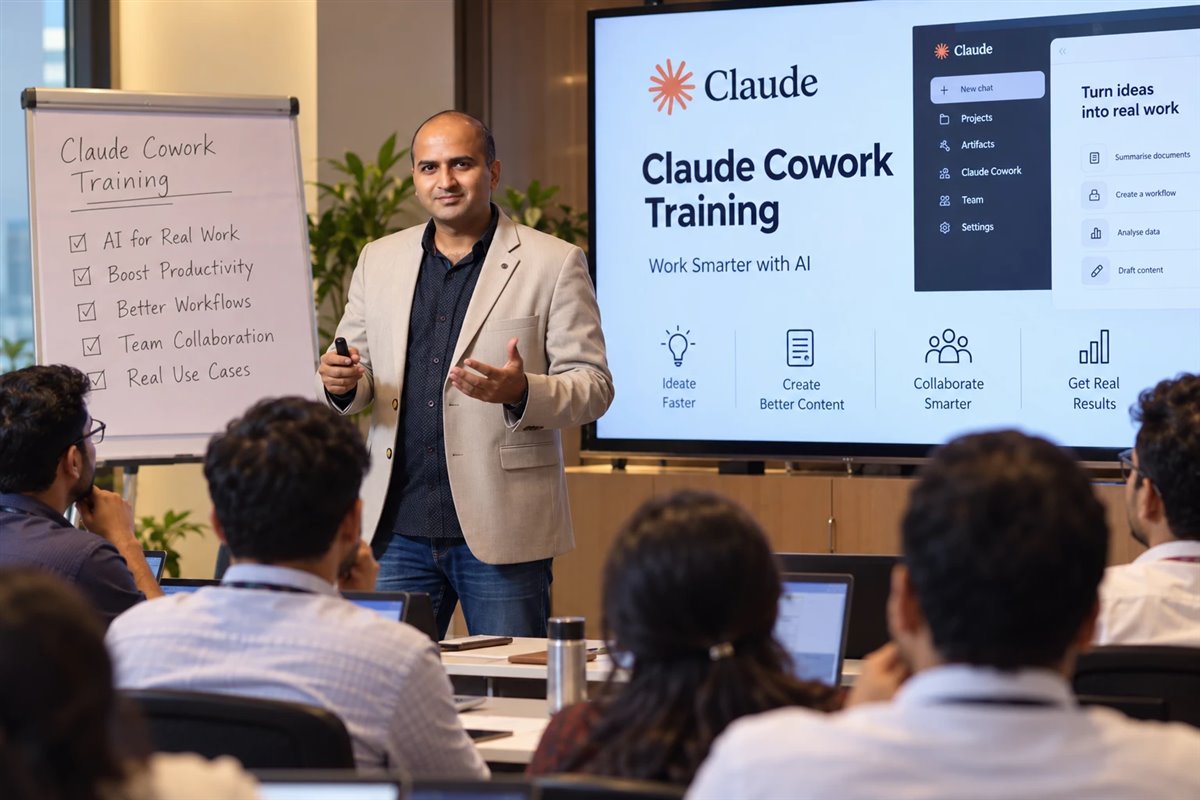

Planning AI training for your employees?
Tell us which teams, how many people and which AI tools you license. Hitesh will suggest a pilot and a rollout plan built on your teams’ real work, your data rules and your timeline.
- Company-wide: pilot, department workshops and an AI champions network
- Leaders: a focused session for founders, boards and CXOs
- Teams: half-day, full-day or multi-session, onsite or online
- Prefer to talk first? Book a free 30-minute call or WhatsApp Hitesh’s team
Corporate AI training providers: questions buyers ask
Who are the top corporate AI training providers?
This list compares Hitesh Motwani (delivered through Skillopedia), Edstellar, Great Learning, upGrad, Simplilearn, Edureka, Intellipaat, Scaler, General Assembly and Coursera for Business. Choose by need: hands-on adoption, technical depth or self-paced scale.
What is company-wide AI training?
A phased programme that brings every employee to a working level with AI: foundations for all, function workshops, a leadership track, AI champions and adoption measurement.
Which companies provide hands-on AI employee training?
Look for providers whose sessions have employees practise on their own tasks with feedback. Hitesh Motwani builds every session on participants’ real emails, reports, spreadsheets and decks. Edstellar, General Assembly, Simplilearn and Edureka also describe hands-on or role-specific formats; ask each for a sample session built on one of your workflows.
How do I choose a corporate AI skill development training provider?
Check five things: practice on your own work, training on the tools you already license, clear data-handling rules, named and experienced trainers, and a plan for follow-up and measurement. Send every shortlisted provider the same RFP questions so you can compare like with like.
How much does corporate AI training cost?
Most providers, including every one on this list, quote corporate training per engagement rather than publishing prices. Common models are per session or day, per participant, a programme fee for a phased rollout, a per-user platform licence, or a monthly retainer. Scope, headcount, customisation and onsite travel drive the quote.
Should we train everyone at once or start with a pilot?
Start with a pilot of two teams. It gives you a baseline and examples, and lets you fix the format before training every department.
Which AI tools should employee training cover?
Start with the tools your company already licenses, such as Microsoft Copilot, ChatGPT, Claude or Gemini, so people can use what they learn on Monday. Add AI agents and automation (for example n8n with MCP) for power users and champions.
Do corporate AI training providers give certificates?
Many do. Platforms such as Coursera issue course certificates, and some providers co-certify with universities (Intellipaat’s generative AI course names iHUB IIT Roorkee and Microsoft). Treat certificates as proof of attendance; measure adoption separately.
How do we measure whether AI training worked?
Set a baseline first, then track weekly active users from your AI tool’s admin reports, before/after examples of real work, and a short confidence survey at 30 and 90 days. Avoid providers that promise a fixed productivity percentage.
What data-protection rules apply when employees use AI in India or the UAE?
In India, the Digital Personal Data Protection Act, 2023 and the DPDP Rules, 2025 apply to personal data. In the UAE, Federal Decree-Law No. 45 of 2021 applies, with separate laws in DIFC and ADGM. Training should teach employees which tools are approved and what never to paste. This is general information, not legal advice.
What is the difference between an AI training company and an e-learning platform?
A training company delivers live, customised sessions; a platform licenses self-paced courses. Many companies use both: a platform for breadth, live training for heavy AI users.
Does Hitesh Motwani deliver corporate AI training in India and the UAE?
Yes. Hitesh runs onsite and live online programmes for teams in India, the UAE and internationally, from leadership briefings to department rollouts. Send your team’s details or book a free call.
Plan your programme
- Corporate training on generative AIThe full hands-on curriculum for teams
- AI training for leadersFor boards, founders and CXOs
- Generative AI training in the UAEOnsite programmes for UAE teams
- AI training for managers and departmentsDepartment-by-department rollouts
- Generative AI for HR teamsHands-on training for HR
- Generative AI for finance teamsReports, analysis and controls
- Generative AI for marketingContent, research and campaigns
- Generative AI for legal teamsDrafting and review, with safeguards
- Case studiesAnonymised results from real engagements
- Top AI trainers in IndiaIf you would rather compare individual trainers
Licences don’t change work. Hands-on practice does.
Shortlist two or three providers, send them the same RFP questions and ask for a sample session on your own workflow. If you would like Hitesh to propose a pilot for your teams, onsite or online, get in touch.
200,000+ professionals trained · 16+ countries · 4.8★ average session rating
Pick a time for a free call
For HR, L&D and business leaders planning AI training. The call is free and there is no obligation.
Calendar not loading? Open the booking page.
Send an enquiry
Tell us about your teams, headcount, cities and the AI tools you use. Every enquiry gets a personal reply.