Best AI Courses for Kids and Teens in India (2026-27): 10 Free and Paid Options
Quick answer: most children in India should start with a free option and a parent nearby: Code.org’s Hour of AI activities (Grades 3-12) or the Experience AI lessons from the Raspberry Pi Foundation and Google DeepMind. If your child enjoys it, the strongest paid AI courses for kids in India are live: Codingal for one-to-one classes with a coding track (ages 7-17), BrightCHAMPS for a generative AI course in small groups (ages 6-16, from ₹603 to ₹772 a class plus tax), and Hitesh Motwani’s AI Explorers (9-11) and AI Innovators (13-17) for no-code, project-based classes in small groups. Teens can also take the government’s free YUVA AI for All course.
- ✓10 courses and programmes, free and paid · live 1-to-1, small groups, self-paced and school routes
- ✓Age bands, fees and formats from each provider’s own page · no aggregator prices
- ✓Age rules for ChatGPT, Gemini, Copilot and Claude · checked on the official pages
Not sure what suits your child? Ask about the live AI Explorers (9-11) and AI Innovators (13-17) classes. Send an enquiry · Book a free call

Compiled by an AI trainer whose clients include teams at companies like these









The 10 best AI courses for kids in India, compared side by side
All ten can be taken from anywhere in India. Ages, formats and fees were checked on each provider’s own page in October 2026. Where a provider does not publish a price, we say so instead of guessing.
| # | Course | Provider | Ages / grades | Format | Cost (Oct 2026) | Best for |
|---|---|---|---|---|---|---|
| 1 | AI Genius and AI Expert | Codingal | 7-14 and 12-17 (Grades 3-12) | Live 1-to-1, 48 lessons of 45 min | Not shown; quoted after a free lesson | Children who want AI plus real coding |
| 2 | Gen AI for Kids | BrightCHAMPS | 6-16 | Live group or 1-to-1, 1-hour classes | ₹603-772 a class + tax (group; minimum 50-125 classes) | Families who want a structured GenAI track |
| 3 | AI Explorers and AI Innovators | Hitesh Motwani | 9-11 and 13-17 | Live small-group online, no-code, 9 modules | Shared on a free call | Creative, project-based learning without coding |
| 4 | AI and coding classes | JetLearn | 6-16 | Live 1-to-1, one class a week | From €119 a month | Families who want weekly 1-to-1 mentoring |
| 5 | Hour of AI and AI curricula | Code.org | Grades 3-12 | Self-paced or class-led | Free | A first taste of AI in an hour |
| 6 | Experience AI | Raspberry Pi Foundation and Google DeepMind | About 8-16 | Teacher- or parent-led lessons | Free | Schools, clubs and hands-on parents |
| 7 | YUVA AI for All | MeitY / IndiaAI Mission | Teens and adults | Self-paced online, about 4.5 hours | Free, with a government certificate | Older teens who want a certificate |
| 8 | Day of AI curriculum | MIT RAISE | PreK-12 | Class-led lessons and family resources | Free | Teachers and parents who want a full curriculum |
| 9 | Teachable Machine | Any age with an adult | Free browser tool | Free | Seeing how a model learns, in minutes | |
| 10 | Computational Thinking and AI | CBSE (your school) | Classes 3-8, plus subject options later | School subject | Part of school fees | Every CBSE student, as the baseline |
Ranking is editorial opinion. We weighed whether a child actually makes things with AI (not just watches), live teaching and attention per child, age fit, safety and parent visibility, fee transparency and value. No provider paid to be listed, and we publish no ratings or outcome claims.
AI tools and age limits: what parents in India should know
A good AI course for children is as much about judgement as about tools. Before you sign up, check which tools the course uses and whether your child is old enough for them. These are the providers’ own rules, checked in October 2026.
| Tool | Minimum age (provider’s own rules) | What parents can do | Source |
|---|---|---|---|
| ChatGPT (OpenAI) | 13+, and under-18s need a parent or guardian’s permission | Link accounts through Parental controls: reduce sensitive content, set quiet hours, turn off voice or image generation. Parents do not see the teen’s conversations. | Terms of use, help article |
| Gemini (Google) | Personal accounts; under-13s only through a Family Link account a parent manages. Work accounts need 18+. | In Family Link, parents can turn Gemini off for a child under 13 | Gemini Apps help |
| Microsoft Copilot | 13+, higher in some countries | Use family settings and review the account together | Microsoft support |
| Claude (Anthropic) | 18+ on the consumer service | Not for children; teens should use other tools | Consumer terms |
Under 13
- Use courses where the teacher runs the tools, or child-friendly tools like Teachable Machine
- No personal chatbot accounts without a parent-managed setup
- Sit in on the first class
13 to 17
- Set up accounts together, with parental controls where offered
- Agree what never goes into a chatbot: full name, school, photos, addresses
- Talk about homework rules and honesty
India’s data law
- The DPDP Act treats everyone under 18 as a child and requires verifiable parental consent to process their data
- The DPDP Rules were notified on 14 November 2025 with an 18-month phased timeline
- Ask any course provider how it stores your child’s data and recordings
Sources: PIB on the DPDP Rules (14 November 2025); Digital Personal Data Protection Act, 2023, section 2(f) and section 9. Checked October 2026.
Top 10 AI courses for kids and teens, reviewed one by one
Each entry covers what your child will do, who it suits, pros and watch-outs, cost and format, with a link to the provider’s own page. Live paid courses come first, then free courses, tools and the school route.
Codingal: AI Genius (ages 7-14) and AI Expert (ages 12-17)
Codingal’s AI track has two levels. AI Genius (Grades 3-7) uses block-based and app tools to build AI games, apps and chatbots; AI Expert (Grades 8-12) moves to Python, image processing and working with large language models. Both are taught one-to-one, live, in 45-minute sessions.
What you learn
- AI games, apps and chatbots (AI Genius)
- Python and image processing with OpenCV (AI Expert)
- Working with LLMs and AI APIs
- Projects the child presents
Pros
- One-to-one attention every lesson
- A clear path from playful projects to real Python
Watch out for
- No price on the page; you get a quote after a free lesson
- AI Expert assumes some Python; the page lists both 4-6 and 3-6 months as duration
Format: 48 live private sessions of 45 minutes, online. Length: about 4-6 months. Cost: not shown. Certificate: STEM.org-accredited certificate.
Source: Codingal AI courses page, checked October 2026.
BrightCHAMPS: Gen AI for Kids (Essentials, Fundamentals, Master)
A generative AI course in three levels, taught live in one-hour classes, in a small group or one-to-one. It covers prompting, chatbots and image recognition, and includes ethics, bias awareness and safe use, which matters for this age group.
What you learn
- Prompting and chatbots
- Image recognition
- Creating content with AI
- Ethics, bias and safe AI use
Pros
- Published rupee prices for group classes
- Safety and ethics are part of the syllabus
Watch out for
- A large upfront commitment: the minimum is 50, 90 or 125 classes
- One-to-one prices are not shown in rupees
Format: live, 1-hour classes, group or one-to-one. Cost (group, plus taxes): Essentials ₹772 a class for a minimum of 50 classes; Fundamentals ₹677 for 90; Master ₹603 for 125. Certificates: 4, 7 or 9 certifications by level.
Source: BrightCHAMPS Gen AI for Kids page, checked October 2026.
| Trained | 200,000+ professionals across 16+ countries |
| Clients include | Google, Microsoft & Tata Group |
| Expertise | LLMs, AI agents, prompt engineering & automation |
| Leaders | AI training for founders & CXOs |
| Approach | Practical, deployment-based |
| Experience | 17+ years · 4.8★ average session rating |
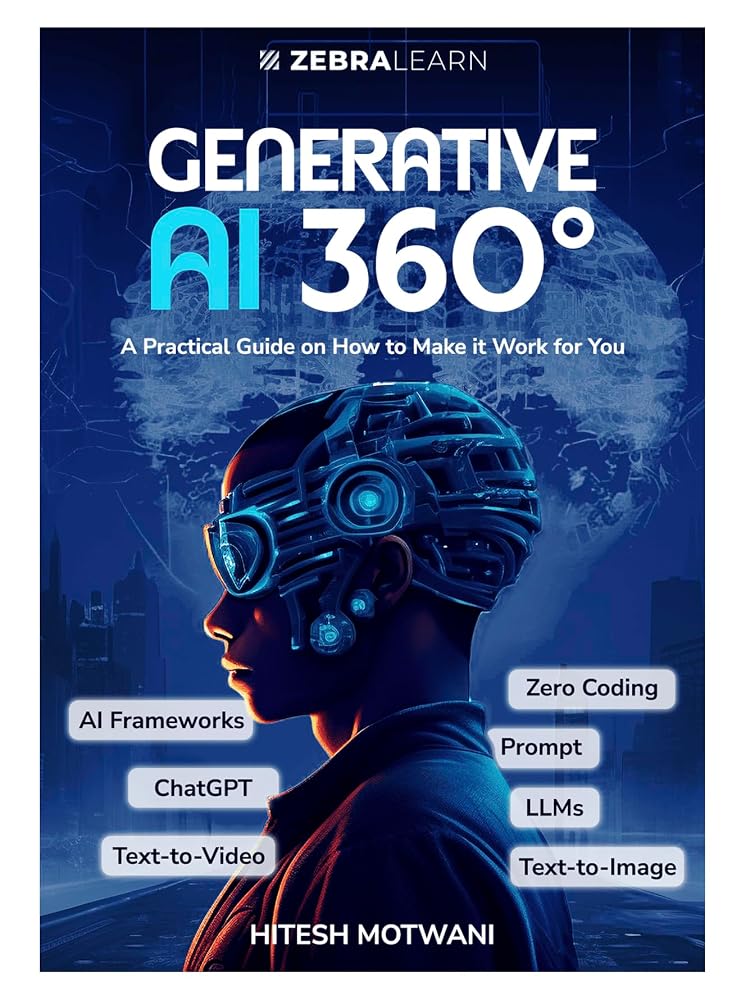
| Author | Generative AI 360° |
Hitesh Motwani: AI Explorers (ages 9-11) and AI Innovators (ages 13-17)
Two live, small-group online courses listed on this site and taught across India. AI Explorers (ages 9-11) runs nine modules in which children make a pattern-guessing game, an illustrated and then a talking storybook, a chatbot on a favourite topic, a mini website and a choose-your-adventure game, ending in a creative portfolio. AI Innovators (ages 13-17) goes further: how large language models work, prompt engineering, AI design and video, a personal study assistant, a deployed website, a no-code AI app and a capstone project.
The approach is the same one Hitesh uses with working professionals: hands-on practice on real projects rather than lectures, so learners leave with things they made and habits they keep, including checking AI’s answers instead of trusting them blindly. We rank it third because the paid entries above offer one-to-one options and a coding path; if you want creative, no-code projects in a small group, this is the one to look at.
Pages for families
- Ages 9-11: AI course for kids in India or the full AI Explorers curriculum
- Ages 13-17: the AI Innovators course for teens
- By city: kids in Mumbai, kids in Delhi, teens in Bengaluru and teens in Hyderabad
Format: live small-group classes online, nine modules, a project each module. Cost: schedules, group sizes and fees are shared on a free call. Tools: for teens, accounts on AI tools follow each provider’s age rules (see the safety table). Disclosure: this guide is published on Hitesh Motwani’s own site.
JetLearn: AI and coding classes for kids
An online academy teaching AI, coding and STEM in live one-to-one classes, one per week, with tracks matched to age. It is subscription-based rather than a fixed course, so it suits families who want an ongoing mentor.
What you learn
- Introductory AI concepts
- Generative AI projects
- Coding foundations
- Age-matched tracks
Pros
- One-to-one, with a weekly rhythm
- Monthly plans instead of a large prepaid package
Watch out for
- Priced in euros on the page we checked; ask for a rupee quote
- No certificate described
Format: live 1-to-1, one class a week. Cost: from €119 a month. Ages: 6-16.
Source: JetLearn site, checked October 2026.
Code.org: Hour of AI, AI Discoveries and AI Foundations
Code.org’s Hour of AI offers one-hour activities such as AI for Oceans (Grades 3-12), where children train a model by labelling examples. For more depth, AI Discoveries is a free middle-school course (Grades 6-8) and AI Foundations a free high-school curriculum (Grades 9-12).
What you learn
- Training a simple model with examples
- How AI makes decisions and mistakes
- Generative AI basics
- Ethics and fairness
Pros
- Free, and the one-hour activities need no setup
- A path from one hour to a full year
Watch out for
- The longer courses are designed for teachers to run
- US grade labels; match by age
Format: self-paced activities or class-led curricula. Cost: free. Note: new Hour of AI activities launch on 16 November.
Source: Hour of AI and Code.org AI curricula, checked October 2026.
Experience AI (Raspberry Pi Foundation with Google DeepMind)
A set of free lessons developed by the Raspberry Pi Foundation with Google DeepMind. They come with everything a teacher needs, including slides and activities, and units are grouped by age, from a single introductory lesson for younger children to multi-lesson modules for 11-14 and 14-16.
What you learn
- How machine learning works
- Bias and ethics
- AI safety
- Solving problems with AI
Pros
- Free and carefully designed for children
- Strong on judgement and ethics, not only tools
Watch out for
- Built for teachers; a parent has to deliver it
- No student certificate
Format: lesson plans with slides and activities. Cost: free.
Source: Experience AI, checked October 2026.
YUVA AI for All: Foundation Course on Responsible AI Learning
A free, self-paced national course launched by the Ministry of Electronics and IT under the IndiaAI Mission. It takes about four and a half hours and is open to all citizens, including school students; every learner who completes it gets a Government of India certificate.
What you learn
- What AI is
- Using AI to learn and create
- Responsible and ethical AI
- Prompting basics
Pros
- Free, short and official
- A certificate teens can add to a portfolio
Watch out for
- Written for a general audience, not designed for children
- Needs an account on the hosting platform; help younger teens set it up
Format: self-paced online, about 4.5 hours. Cost: free. Certificate: Government of India certificate on completion.
Source: PIB announcement and FutureSkills Prime course page, checked October 2026.
MIT RAISE: Day of AI curriculum
MIT RAISE’s Day of AI has grown into a free, grade-by-grade AI literacy curriculum from pre-kindergarten to Grade 12. It focuses on understanding AI and using it responsibly, with free tools and resources for families.
What you learn
- AI literacy by grade
- Responsible and ethical AI
- Free, open AI tools
- Classroom and family activities
Pros
- Free, research-backed and age-graded
- Strong on responsible use
Watch out for
- US-centric examples and grade labels
- Written for teachers; needs an adult to run it
Format: class-led lessons plus family resources. Cost: free.
Source: Day of AI, checked October 2026.
Google Teachable Machine
Not a course but a free browser tool from Google: you show the computer examples, for instance thumbs-up and thumbs-down photos, and it learns to tell them apart in minutes. It is the quickest way to make “training a model” real for a child, and many paid courses use it.
What you learn
- Collecting examples (data)
- Training a model
- Testing and finding mistakes
- Talking about why the model gets things wrong
Pros
- Free, no account needed to try it
- Makes abstract ideas concrete fast
Watch out for
- No lessons or structure; an adult needs to guide it
- Uses the webcam or microphone, so supervise
Format: free web tool. Cost: free. Pair with:Machine Learning for Kids, which lets children use their models in Scratch.
Source: Teachable Machine, checked October 2026.
CBSE: Computational Thinking and AI (Classes 3-8), plus AI subjects later
From the 2026-27 session CBSE has introduced Computational Thinking and AI for Classes 3 to 8, combining computational thinking, AI, ethics and unplugged activities. Older students have AI options in the senior classes, but CBSE is reworking the Class 9 subject for 2026-27, so ask your school what it offers in each class.
What you learn
- Computational thinking and problem solving
- Basic AI ideas
- Ethics
- Unplugged (screen-free) learning
Pros
- Free, inside the school timetable
- Gives every child a shared baseline
Watch out for
- Depth depends on the school and teacher
- The Class 9-10 subject options are changing; check before choosing
Format: school subject. Cost: part of school fees. Assessment: by the school and board.
Source: CBSE circular Acad-15/2026 and CBSE curriculum 2026-27, checked October 2026.
Not listed: we left out courses we could not verify on an official page in October 2026, and any that are only available to families outside India. Khan Academy’s Khanmigo, for example, is limited to learners in the United States.
Disclosure: this guide is published by Hitesh Motwani, whose AI Explorers and AI Innovators courses are entry 3. Every other entry was checked on its provider’s own page in October 2026 and links to its source. Prices change, so confirm before you pay.
Want a live AI course for your child?
Tell us your child’s age, where you live and what they enjoy. We will share the next AI Explorers (9-11) or AI Innovators (13-17) batch, timings and fees.
- Ages 9-11: stories, images, voice, a chatbot, a website and a game, all no-code
- Ages 13-17: LLMs, prompting, AI design and video, a study assistant, a website and an AI app
- Schools and groups: sessions for a class or club, online
- Prefer to talk first? Book a free call or WhatsApp Hitesh’s team
What a good AI course looks like at each age
“AI for kids” covers everything from a six-year-old sorting pictures to a sixteen-year-old building an app. Match the course to the stage, not the label.
Ages 6-8: play and patterns
- Sorting, patterns and simple “teach the computer” games
- Unplugged activities and short screen time
- An adult runs any tools
- Free options are usually enough
Ages 9-12: make things
- Stories, pictures, voices and simple chatbots
- Training a model with their own examples
- Asking “how could the AI be wrong?”
- Live classes in small groups work well
Ages 13-17: build and judge
- How large language models work and fail
- Prompting, research and fact-checking
- No-code apps or Python, depending on interest
- Academic honesty and privacy
How to choose an AI course for your child without overpaying
Many “AI courses” for children are coding courses with a new label, sold in large prepaid packages. Four checks avoid most mistakes.
Questions for the demo class
- What will my child make in the first four classes?
- Which AI tools do you use, and are they allowed at my child’s age?
- How many children per class, and who is the teacher?
- Can I see the full price, including tax, and the refund policy?
Red flags
- Job, salary or “future-proof” promises for a child
- Pressure to prepay 50 to 100+ classes on the first call
- “AI” that turns out to be only block coding
- No word on safety, privacy or parent visibility
Free or paid?
Start free. One Hour of AI activity or a Teachable Machine session tells you more about your child’s interest than any brochure. Pay when they ask for more.
One-to-one or group?
One-to-one suits shy children and fast learners. Small groups add ideas, friendly competition and presenting to peers, and usually cost less per hour.
Coding or no-code?
Both are valid. Coding builds logic for later study; no-code lets children make impressive things sooner. Many children do no-code first, then code.
An 8-week family plan before you pay for a course
About an hour a week, done together. It costs nothing and shows you whether a paid course is worth it.
Weeks 1-2: Try it together
Do an Hour of AI activity and a Teachable Machine session with your child. Talk about what the computer got wrong and why.
Weeks 3-4: Make something small
Use free Experience AI or Day of AI lessons to make one small project. Agree family rules for AI tools and personal information.
Weeks 5-6: Try a live class
Book free demo classes with two providers from the list. Use the demo questions above and compare honestly.
Weeks 7-8: Decide
If your child is keen, choose a paid course that fits their age and style. If not, keep exploring free options; there is no rush.
Related guides: free AI courses with a certificate · ChatGPT courses in India · Google Gemini courses · AI learning path
Who compiled this list, and how
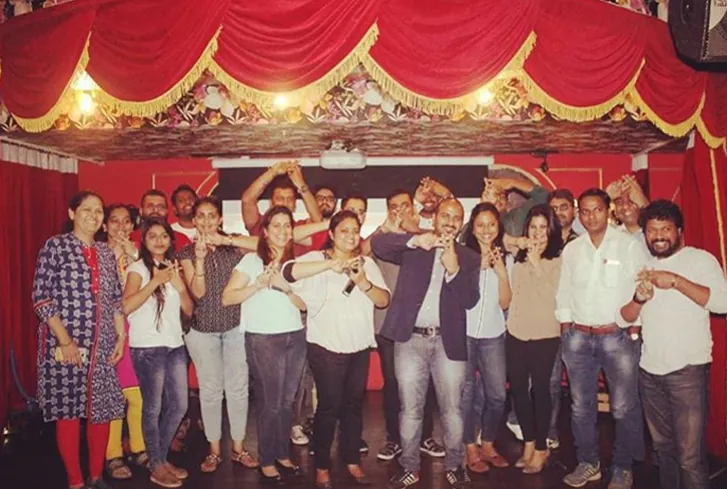
This guide is by Hitesh Motwani, an AI trainer and the author of Generative AI 360°. He has trained 200,000+ professionals across 16+ countries, his corporate clients include Google, Microsoft and Tata Group, and he runs leadership-focused AI training for founders and CXOs.
Every course above was checked on its provider’s own page in October 2026, including age band, format and price. The AI tool age rules were checked on OpenAI, Google, Microsoft and Anthropic pages. Entries are ranked by how much children make, live teaching, age fit, safety, fee transparency and value. Hitesh’s own courses are included as one entry, ranked where we honestly think they fit.

AI courses for kids in India: parents’ questions answered
Which is the best AI course for kids in India?
It depends on age and style. Start free with Code.org’s Hour of AI or Experience AI. For paid live courses, Codingal suits children who want one-to-one classes and a path into coding, BrightCHAMPS offers a structured generative AI course with published rupee prices, and Hitesh Motwani’s AI Explorers (9-11) and AI Innovators (13-17) suit children who learn by making no-code projects in small groups.
What is the right age to start learning AI?
Children can start exploring AI ideas, such as teaching a computer with examples, from about six with an adult. CBSE introduces computational thinking and AI from Class 3 from the 2026-27 session. Hands-on use of chatbots should follow each tool’s age rules: 13+ for ChatGPT and Copilot, with parental permission under 18.
Are there free AI courses for kids in India?
Yes. Code.org’s Hour of AI and AI curricula, Experience AI from the Raspberry Pi Foundation and Google DeepMind, MIT RAISE’s Day of AI and Google’s Teachable Machine are all free. Older teens can take the Government of India’s free YUVA AI for All course, which comes with a certificate.
Can a child under 13 use ChatGPT?
No. OpenAI’s terms require users to be at least 13, and users under 18 need a parent or guardian’s permission. Parents of teens can link accounts and use parental controls, such as quiet hours and reduced sensitive content, though they cannot read their teen’s conversations.
How much does an AI course for kids cost in India?
Free options cover the basics. BrightCHAMPS publishes group prices of ₹603 to ₹772 per class plus tax, with minimums of 50 to 125 classes; JetLearn starts from €119 a month; Codingal and Hitesh Motwani share fees after a free lesson or call. Always ask for the full price including tax before prepaying.
Does my child need to know coding for an AI course?
No. Many good courses for children are no-code, including AI Explorers and AI Innovators, and the free tools on this list need no coding. Codingal’s AI Expert level is the exception: it uses Python.
Is an online AI course safe for children?
It can be, if the provider uses age-appropriate tools, keeps classes supervised and explains how it stores children’s data and recordings. India’s DPDP Act treats everyone under 18 as a child and requires verifiable parental consent to process their data. Sit in on the first class and ask the provider about privacy.
What will my child actually learn in an AI course?
A good course mixes making and understanding: training a simple model, creating stories, images or chatbots with AI, and learning how AI can be wrong or biased. Teen courses add how large language models work, prompting, fact-checking and building apps or websites.
Is AI taught in CBSE schools?
Yes. From the 2026-27 session CBSE has introduced Computational Thinking and AI for Classes 3 to 8. AI options also exist in the senior classes, but CBSE is changing the Class 9 subject for 2026-27, so check with your school what is offered in each class.
Which AI course is best for teenagers in India?
For teens who want to code, Codingal’s AI Expert (ages 12-17) moves into Python and LLMs. For teens who want to build portfolio projects without coding, Hitesh Motwani’s AI Innovators course for teens (13-17) covers prompting, AI design and video, a study assistant and a no-code AI app. YUVA AI for All adds a free government certificate.
Do kids get a certificate from an AI course?
Many paid courses issue one: Codingal mentions a STEM.org-accredited certificate and BrightCHAMPS lists certifications by level. YUVA AI for All gives a Government of India certificate. For a child, the projects they can show matter far more than the certificate.
Should children use AI for homework?
Use it to learn, not to hand in. Children can ask AI to explain a topic or quiz them, but they should do the work themselves, check facts, and follow their school’s rules on AI. A good course teaches exactly this.
Keep exploring
- AI course for kids in IndiaAI Explorers, ages 9-11
- AI course for teensAI Innovators, ages 13-17
- AI course for kids: full curriculumNine modules, a project in each
- Best Google Gemini courses and certificationsFree Google certifications for educators, students and professionals
- Best agentic AI courses in IndiaIIT programmes, edtech and free agent courses compared
- Best prompt engineering courses in IndiaFree and paid courses, fees and certificates
- Best ChatGPT courses in IndiaOpenAI Academy, free and paid options
- Best Microsoft Copilot coursesMicrosoft Learn paths and AB-730 certifications
- Best Claude AI coursesAnthropic Academy and Claude certifications
- Best Claude Code coursesFrom Anthropic’s free course to live cohorts
- Best Claude Cowork coursesLearn Anthropic’s desktop agent
- Best generative AI courses in IndiaProgrammes and certificates compared
- Free AI courses with a certificateGovernment and Big Tech courses, free
- Best AI courses in MumbaiIIT Bombay, IIM Mumbai, SPJIMR and classroom options
- Best n8n and AI automation coursesOfficial n8n Academy, Udemy, Coursera and free options
- Best AI certifications in IndiaWhich certificates are worth your time
- Best AI courses for marketing professionalsFor marketers, agencies and brand teams
- Best AI courses in DubaiProgrammes for UAE professionals
- Best AI courses in BangaloreIISc, IIM Bangalore, IIIT-B and classroom options
- Best AI courses for working professionalsSorted by the time you actually have
- Chief AI Officer coursesCAIO and C-suite AI programmes, India, UAE and online
- Best AI courses in PuneC-DAC, COEP, SPPU and classroom options
- AI workshops in DubaiHalf-day to two-day workshops
- Best AI bootcamps in IndiaIntensive, project-heavy programmes compared
- Highest-paying AI jobs in IndiaRoles, skills and sourced salary data
- Best AI courses in DelhiProgrammes in Delhi NCR compared
- Best AI courses in HyderabadProgrammes in Hyderabad compared
Let your child make things with AI, safely and with a teacher.
Start with a free activity this week. When your child wants more, ask about the live AI Explorers (9-11) and AI Innovators (13-17) classes, taught in small groups online across India.
200,000+ professionals trained · 16+ countries · 4.8★ average session rating
Pick a time for a free call
For parents and schools across India planning an AI course for children or teens. The call is free and there is no obligation.
Calendar not loading? Open the booking page.
Send an enquiry
Tell us your child’s age, your city and what they enjoy. Every enquiry gets a personal reply.